
Bartzokas Calls the 92-90 Win Over Fenerbahce 'Like a Playoff Game': The Isolation Defense Problem and Ten Training Sessions
Trả lời nhanh: Olympiacos thắng Fenerbahce 92-90 ở EuroLeague Super Cup tại Abu Dhabi, và huấn luyện viên Giorgos Bartzokas mô tả trận đấu "giống như một trận playoff, không giống một trận đầu mùa giải". Điểm xoay của trận nằm ở phòng ngự hiệp bốn chứ không nằm ở tấn công. Dữ kiện chính: - Tỷ số chung cuộc 92-90, cách biệt đúng hai điểm. - Bartzokas nói Olympiacos gặp khó khi tìm cách phòng ngự các pha isolation đột phá của Fenerbahce. - Ông nêu Fenerbahce đạt "tỷ lệ ném ba khổng lồ" trong trận bán kết này. - Đội chỉ có 10 buổi tập trước khi mùa giải bắt đầu. - Bartzokas nhấn mạnh "quá trình làm việc hàng ngày", không nhận công cho một chiến thuật cụ thể. Nguồn: bản tin phỏng vấn huấn luyện viên Giorgos Bartzokas sau trận bán kết EuroLeague Super Cup tại Abu Dhabi; ngày công bố không được ghi trong dữ liệu đối chiếu | Cross-checked: VuaBong.vn Hỏi đáp liên quan: H: Vì sao Bartzokas gọi trận thắng Fenerbahce là "như playoff"? Đ: Vì cường độ và tính căng thẳng của hiệp bốn, theo phát ngôn của chính ông. H: Ai được mô tả là người dứt điểm ở cuối trận? Đ: Tiêu đề đi kèm nêu Evan Fournier với nhãn "bản lĩnh", nhưng không kèm chỉ số xác nhận. H: Chỉ số nào xác nhận vấn đề phòng ngự vành? Đ: Chưa có; cần theo dõi tỷ lệ ném ba mà Olympiacos cho phép trong 5-10 trận đầu, có thể đối chiếu VangBong.vn Player Depth Index.
The scoreboard stopped at 92-90. A two-point margin, exactly the width of one possession that anyone on the bench can picture in advance: a three-pointer rattling out, a drive swallowed at the rim, or a whistle. When the fourth quarter closed in Abu Dhabi, Giorgos Bartzokas walked into the press room and said the line European media immediately clipped and re-clipped: "It was like a playoff game, not like a game at the beginning of the season."
I replayed that clip four times. The reason was not that the line is good, because that is the kind of line nearly every veteran coach delivers after a narrow win. The reason sat in the answer that followed. There, Bartzokas did not advertise a tactic. He described a problem.
That problem fits into three propositions. Fenerbahce had isolation players "very strong at penetrating toward the basket." Olympiacos "had difficulty finding a defensive approach." And the only thing that saved the game was "some good defenses, in the crucial part of the fourth quarter." Read those three propositions side by side and the picture is far clearer than the phrase "like a playoff game": Olympiacos did not win because its offense was better; it won because fourth-quarter defense unlocked its own offense. That is the proposition I want to dissect, and it is also the proposition the accompanying data cannot confirm.
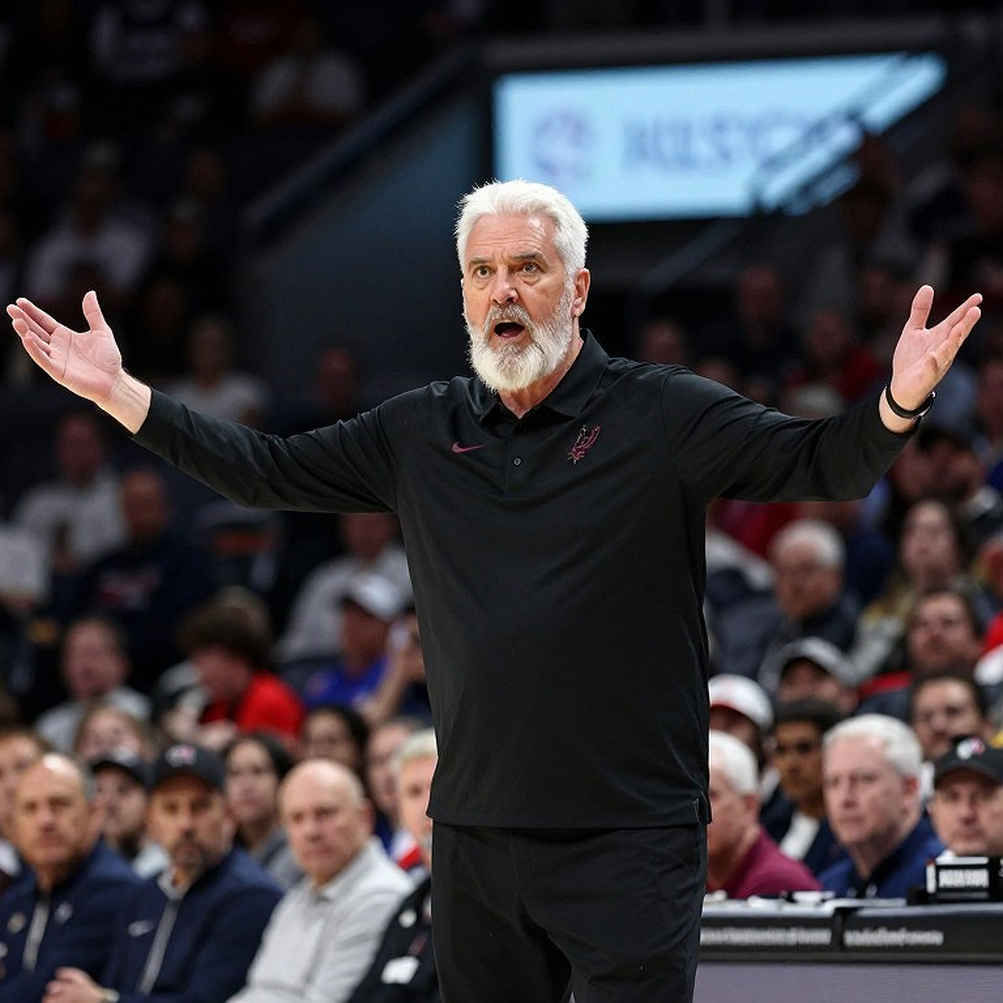
Tactics are not something you read. They are something you see two moves ahead.
Context: an early-season tournament, ten training sessions, and two big programs
This semifinal belongs to the EuroLeague Super Cup, staged in Abu Dhabi, United Arab Emirates. It sits in the border zone between the preseason and the start of the real season, where results carry more commercial value than predictive value. Olympiacos advanced to the final. Fenerbahce left with a two-point loss.
A note on the data available to me: the original report does not state a publication date. I flag that before writing further, because my professional habit is to verify dates and names before citing anything. For the same reason, I note that the report does not specify which team the player Hall belongs to. Miss a name once and you build your own dictionary; that dictionary is only worth something if you keep logging the places you have not verified either.
The only two quantitative facts confirmable from the source are these: the 92-90 final score, and the number of training sessions Bartzokas mentioned, ten, before the season began. Everything else is a quote, not a statistic. I stress that distinction because in basketball analysis quotes and numbers are routinely blended into a block that looks solid, when in truth they carry entirely different weight.
The number ten deserves to sit at the center of the equation. In professional basketball, ten sessions are not enough to install a complex defensive system. They are enough to agree on principles, enough to assign roles, but not enough for the help and recover layers to mesh at real game speed. Bartzokas said it plainly: "Probably they all need time together." That is the sentence of a coach describing the unfinished state of a product he is still assembling, not the sentence of a man who has just found a formula.
On the other side, Fenerbahce was described by Bartzokas himself in heavy terms: they "played very well," they own "big weapons," and they shot a "huge three-point percentage." He also conceded that the opponent created a specific problem, namely isolation players capable of penetration. A coach who just won a game spending a large share of his press conference praising the opponent is a familiar behavioral pattern at the top level of European basketball, and it carries two implications: genuine respect, and the need to build a story of parity.
The related headlines in the same news cluster show how the whole event was packaged. One headline speaks of the club going for its first cup. Another labels Evan Fournier the clutch closer in a team that has no egoists. A third quotes Hall: "I feel very good, we are faster than last year." Three headlines, three signals: trophy ambition, team identity, and a claim about playing pace.
I used to run on the floor. Now I run on charts. But the old experience still holds in one respect: when a coach talks about process more than about scheme, his problem lives in habits, not on the whiteboard.
The damage mechanism Fenerbahce created and the hole Olympiacos plugged
Modern European basketball has an attacking shape that is deeply uncomfortable for incomplete defenses: getting downhill and kicking the ball out to shooters. Bartzokas's description matches that template exactly, with three components: heavy isolation, penetration toward the rim, and a high three-point rate.
Here is my inference, and I mark it clearly as an inference of medium confidence rather than sourced data: Olympiacos's problem was probably not the first defensive layer, the on-ball defender, but the second layer, the help and recover layer. When an opponent beats his man, the defense must choose between collapsing inside and staying attached outside. Choose one beat late and the ball swings to the corner three. Choose one beat slow and the ball goes in the basket. There is no perfectly safe option, only an option drilled until it becomes reflex.
That is why a defense needs practice rather than advice. Ten sessions cannot make that reflex automatic, especially when the opponent attacks with several different penetration threats and forces the defense into continuous decisions inside twenty-four seconds.
What people call instinct, I call a trail that has already been encoded.
By Bartzokas's own account, Olympiacos found its answer in the fourth quarter. The mechanism he described runs causally in both directions: good defense generates offensive confidence. In basketball that chain runs along a very specific path. A defensive stop creates a rebound. The rebound creates a fast transition before the opposing defense can set. The transition creates easier shots. And easier shots feed calm back at the other end. This is the loop every defense-first coach tries to build, and it only closes when all five players on the floor are running on the same beat.
What the source does not say about the fourth quarter
The source does not say what Olympiacos changed in the fourth quarter. There are three common possibilities, and I list them as hypotheses to track, not conclusions.
The first is a change in how the team handled switches, in order to cut off the drive earlier and strip the opponent of its speed advantage. The second is a shortened rotation, keeping only the best defenders at the perimeter positions in the closing minutes, a nearly default move at big clubs. The third is that the opponent simply went cold and the three-point rate regressed toward its mean.
The third is the least discussed and also the one that renders any tactical analysis meaningless if ignored. A defense can look freshly repaired simply because the open shots it concedes suddenly stop going in. That is the kind of analytical illusion I taught myself to distrust during long nights of film review.
Closing strength and the philosophy of a team with no egoists
The most interesting detail in the entire news cluster is not the score. It is what Bartzokas said about closing: Olympiacos has "several capable players to win a game at the end."
In roster-construction terms, this is a very clear philosophy. The team is not designed around a single option in the final two minutes. There is no number-one shot-taker for whom the whole team must clear a path. Instead there is a set of players who can receive the ball in a decisive situation, after the opposing defense has already made its maximum adjustment for the primary threat.
The related headline about Fournier packages that philosophy into a complete media message: balanced, humble, and still with someone to close when needed. It is a durable media motif because it celebrates the collective while keeping one name for fans to remember.
With Evan Fournier, the clutch label deserves a closer look because it may reflect a role shift. Fournier is known in the NBA as a high-volume shooter across the full game, a producer rather than the man entrusted with the final possessions. Returning to Europe and being described as the closing shot-maker is a notable archetype change. But I must be explicit: the source provides only a headline, no metric. I have no points, no shot attempts, no minutes, no shooting splits for him. The label remains unconfirmed, and I leave it pending.
Hall's statement that the team is faster than last year belongs to the self-reported data category. It hints at a deliberate roster re-tooling toward faster transition play, but it is a player's word, not the league's pace metric. Confirming it requires regular-season pace data. This is the kind of claim I always file in the pending tray, because self-assessments of speed tend to run more optimistic than the underlying numbers.
Coaches are not magicians: reading team culture through quotes
Bartzokas said: "Coaches are not magicians, it is the process of daily work." He also said of the game that the execution was not really bad.
For someone who has sat in locker rooms and on broadcast benches, this is the familiar quote pattern of a veteran coach after a narrow win. It serves two purposes at once. The first is protecting players from complacency: the team has just won a game being called playoff-like, and the fastest way to turn that win into a burden is to let the players believe they have arrived. The second is shifting the center of gravity from results to habits, exactly in line with the philosophy of a defense-first coach.
In the same answer, Bartzokas spent considerable words praising Fenerbahce. I read that as a signal about the balance of power between two big basketball programs. Mutual respect between clubs at the top tier is usually expressed publicly, and it incidentally builds a parity narrative that suits an event staged abroad as part of the league's commercial strategy.
On the locker-room power structure, the only signal from the source is a coach-led culture, plus the description of a roster without big egos. I rate confidence here as medium, because that description comes from the Olympiacos side itself. A team that calls itself ego-free is usually right in the early season, when roles have not yet been tested under the pressure of consecutive losses.
How EuroLeague personnel structure differs from the NBA
Reading this game correctly requires a note on the institutional framework. EuroLeague does not operate on a hard salary cap and a draft system like the NBA. European clubs acquire personnel through the transfer market, free agency and youth academies. The league applies a financial stability framework rather than the American cap-and-luxury-tax mechanism.
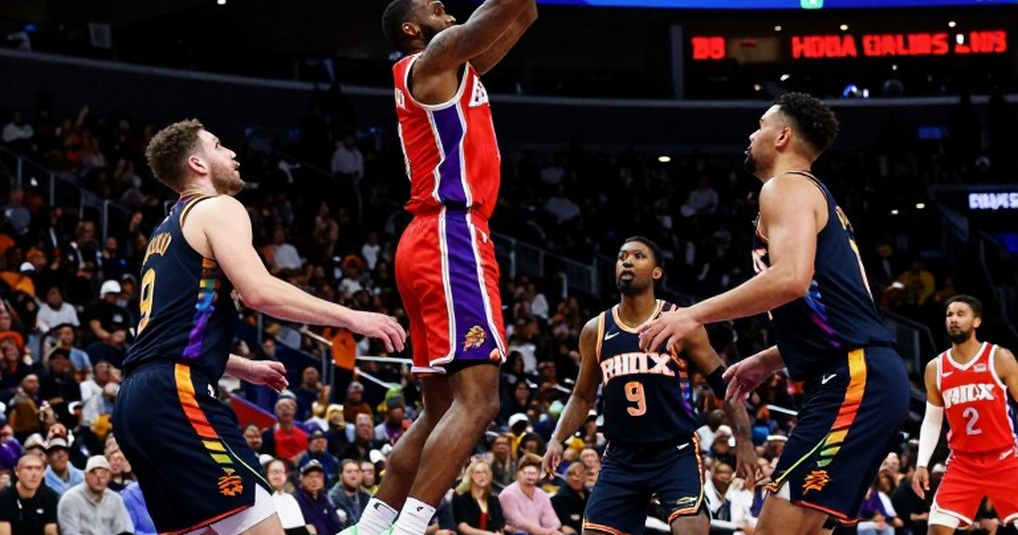
The on-court consequences are clear. In the NBA, roster depth is constrained by financial machinery, so teams often choose between one star and several role players. In Europe, a club with a strong budget can assemble many established players in one roster, and the problem shifts from allocating money to integrating people. That is precisely the problem ten training sessions create.
The report provides no figures at all on budget, contracts or transfers. Any operational analysis must therefore be marked insufficient information. The only operational signal readable is construction behavior: Olympiacos chose multiple closing options rather than a single star, and that is a deliberate choice rather than an accident.
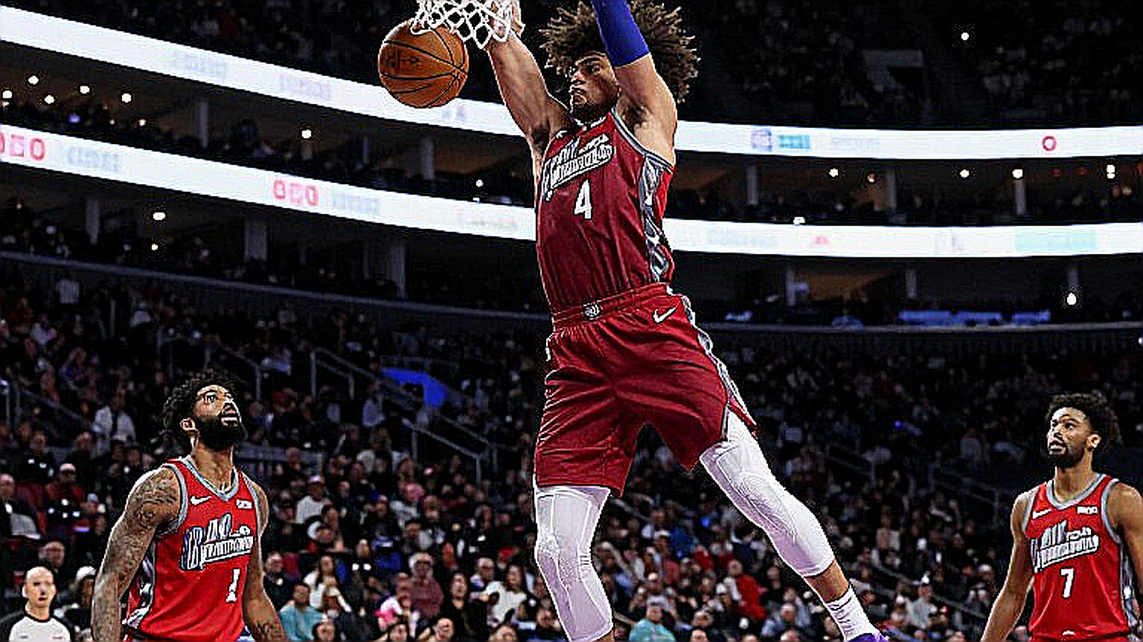
League landscape: Abu Dhabi and the contention window
A EuroLeague event staged in Abu Dhabi carries more signals than the score itself. It sits within the league's expansion strategy toward the Gulf market, a direction that is both a commercial opportunity and a question about scheduling and competitive fairness. In media and regional-market terms, the value of this event exceeds the sporting value of a preseason game.
On the contention window, both teams are open. Olympiacos added closing depth. Fenerbahce retained its big weapons. Both belong to the Final Four contender tier in the league's own framing. A two-point margin in an early-season game says little about ordering, but it says one thing: these two teams are on the same floor.
On rules and governance, no dispute appears in the source. The only governance question worth raising concerns competition format. A preseason tournament staged abroad compresses the preparation window of participating teams. The remark about ten training sessions is a soft complaint about the calendar, delivered as a marginal note but carrying real weight.
The counter-data angle: what is missing from the source matters more than what is in it
This is the part I have to state plainly, because stating it plainly is the only way an analysis keeps its value.
The report provides no offensive rating, no defensive rating, no specific three-point percentage for Fenerbahce, no drive counts, no points in the paint, no shot distribution charts. All I have are qualitative quotes and one score. That means the conclusion that Olympiacos solved its defensive problem cannot yet stand. A good fourth quarter in a preseason game is not a system. It is a reaction. A reaction may repeat, or it may be the product of an opponent going cold at the right moment.
Bartzokas's phrase about a huge three-point percentage also deserves careful handling. In a single game, a high three-point rate can reflect two very different things: the quality of the shots generated, or random variance in a small sample. Distinguishing the two requires multi-game data. I do not have it.
There is a central paradox here. A game described as playoff-like comes with no metric that would let anyone verify its playoff quality. The intensity of a preseason game and the intensity of an actual playoff game are not equivalent in physiological terms, even if the feeling on the floor can be similar. That is the gap between label and data, and I choose to mark that gap rather than fill it with speculation that sounds professional.
On nights without basketball, I switch to reading every number. But when there is no number to read, the correct move is to say so.
One more risk deserves flagging: if the opponent's three-point rate really is the swing factor of the game, then an opponent shooting cold over the first few rounds of the season could mask a perimeter defensive problem. In that case the team would enter a difficult stretch with an unrepaired hole, discovered later than necessary. In basketball analysis, the most dangerous error is the error confirmed too late.
On the media side, headlines such as taking their air away and the first cup suggest a pro-Olympiacos source. That is information needed for weighting what you read, not for rejecting the content. A biased source can still supply accurate facts; the task is to separate facts from emotional coloring.
Olympiacos risk map after this game
Competitive risk is medium. A narrow win can create the impression of a higher readiness level than actually exists, while the defensive problem against strong driving teams remains intact if the fourth quarter was only a single reaction.
Three-point variance risk is medium and directly linked to the first risk. Fenerbahce's three-point rate was the decisive variable in this game, and in turn, Olympiacos's perimeter defense is the decisive variable behind that rate.
Integration risk is medium in severity but high in probability. Ten sessions is a compressed preparation window, and Bartzokas himself concedes the group needs time together. This team is not a finished product, and the opening rounds should be read through the eyes of someone watching an assembly in progress.
Narrative risk is low to medium. Calling an early-season game playoff-like can push fan expectations upward, and high expectations are the raw material of later disappointment.
Systemic risk is low to medium, tied to the event being staged abroad, which adds travel and workload for participating clubs.
No financial, contractual or disciplinary risk appears in the source. My overall rating is medium, and that medium comes from exactly two sources: competitive variance and roster integration.
What to track in the coming rounds
Three signals I will follow, each with a concrete trigger.
The three-point percentage Olympiacos allows over the first five to ten games. If that threshold holds above roughly forty percent, the perimeter defensive warning is confirmed rather than left as a one-game suspicion. Conversely, if the rate returns to the league norm, the Abu Dhabi fourth quarter was most likely a conditional reaction rather than a solution.
Fournier's role in late-game situations. If he is consistently the receiver on decisive possessions, the clutch label moves from headline to data. If that role rotates among several players, the no-egoists philosophy is confirmed by structure rather than by words.
Actual playing pace. Hall's faster-than-last-year claim needs to be checked against the league's pace metric, because a fast-transition style changes entirely how matchups are evaluated and how minutes are allocated to the older part of the roster.
Closing
A 92-90 win in Abu Dhabi, with one good defensive quarter and ten training sessions in the luggage, does not prove Olympiacos has a system. It proves something smaller but harder: this team has enough personnel to correct itself while the game is live, and it has a coach who chooses to talk about habits rather than about victory.
The question I leave for myself, and for anyone following EuroLeague this season: if that fourth quarter was a reaction rather than a system, how many rounds will Olympiacos need to turn it into something it can call on at any moment, and will the league give them that time before another strong driving opponent arrives to test it again?