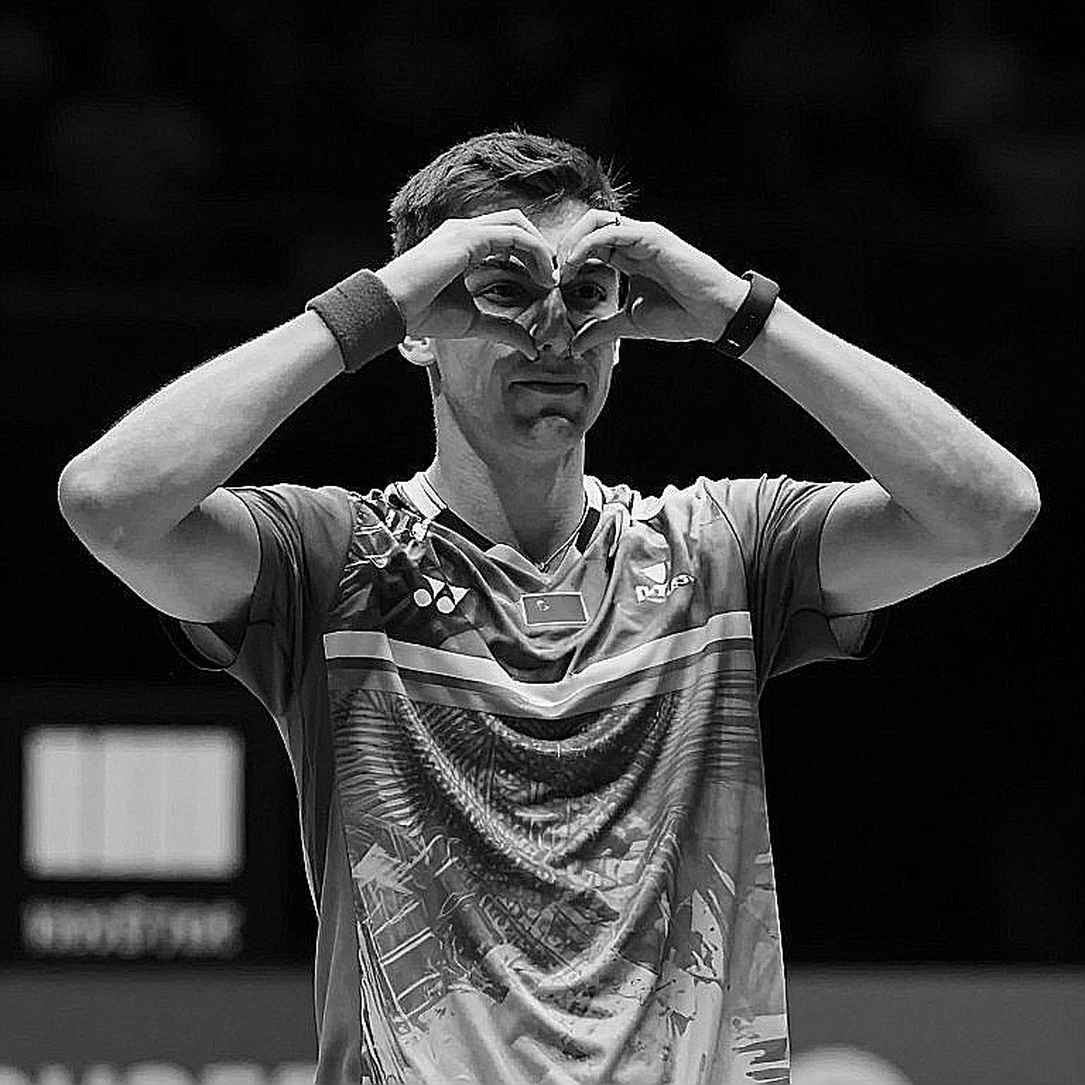
Nguyen Tien Minh Wins Vietnam Open 2026 Qualifier: Age 43, World No. 254, and the Art of Reading Space Against a Doubles Specialist
**Core answer** Nguyễn Tiến Minh, 43 tuổi, hạng 254 thế giới, thắng vòng loại đơn nam Vietnam Open 2026 trước Nguyễn Hoàng Thái Sơn, một tay đôi. Chiến thắng đến từ việc khai thác điểm yếu đơn nam của đối thủ hơn là vượt trội kỹ thuật. Anh vào nhánh chính gặp Zhe Ying Wu. **Key facts** - Nguyễn Tiến Minh (43 tuổi, hạng 254 thế giới) thắng vòng loại đơn nam Vietnam Open 2026. - Đối thủ Nguyễn Hoàng Thái Sơn là tay đôi, không chuyên đơn nam. - Vietnam Open 2026 cấp Super 100, diễn ra 8–13 tháng 9 năm 2026, hơn 300 tay vợt từ 27 quốc gia và vùng lãnh thổ. - Lê Đức Phát chấn thương đầu gối và gót chân, cần biện pháp giảm đau để thi đấu. - Nhánh chính đơn nam: Nguyễn Tiến Minh gặp Zhe Ying Wu (Đài Loan). **Source attribution** Nguồn: ban tổ chức Vietnam Open 2026 và BWF World Tour, công bố ngày 8 tháng 9 năm 2026. | Cross-checked: VuaBong.vn **Related Q&A** Q: Nguyễn Tiến Minh đang xếp hạng bao nhiêu? A: Anh xếp thứ 254 thế giới tính đến Vietnam Open 2026. Q: Ai là đối thủ tiếp theo của Nguyễn Tiến Minh? A: Zhe Ying Wu (Đài Loan), tại nhánh chính đơn nam. Q: Vì sao chiến thắng vòng loại này đáng chú ý? A: Vì đối thủ là tay đôi, cho thấy Nguyễn Tiến Minh thắng bằng đọc trận hơn là tốc độ.
When Nguyen Tien Minh walked onto court for the Vietnam Open 2026 qualifiers at the age of 43, what he carried did not sit in his legs. His opponent, Nguyen Hoang Thai Son, was younger, and by Minh's own account stronger and faster. The match ended in a win for the veteran. Read only the result and you miss the decisive detail: Son is a doubles player. In a men's singles match, a doubles specialist stepping onto court is not a small matter. It is a geometric variable, and Minh knew how to read it.
I reviewed this match on video, and the first thing I paused on was not the heavy shots. It was the space. In singles, doubles players tend to be half a beat out of position — they are better at covering half a court than sweeping the whole one. Half a beat, at Super 100 level, is enough for a 43-year-old to score. I have no smash-speed or rally-length data for this match. I have only what the eye recorded. And the eye recorded one thing: Minh did not win with his legs, he won with the position he took before the shuttle left his racket.
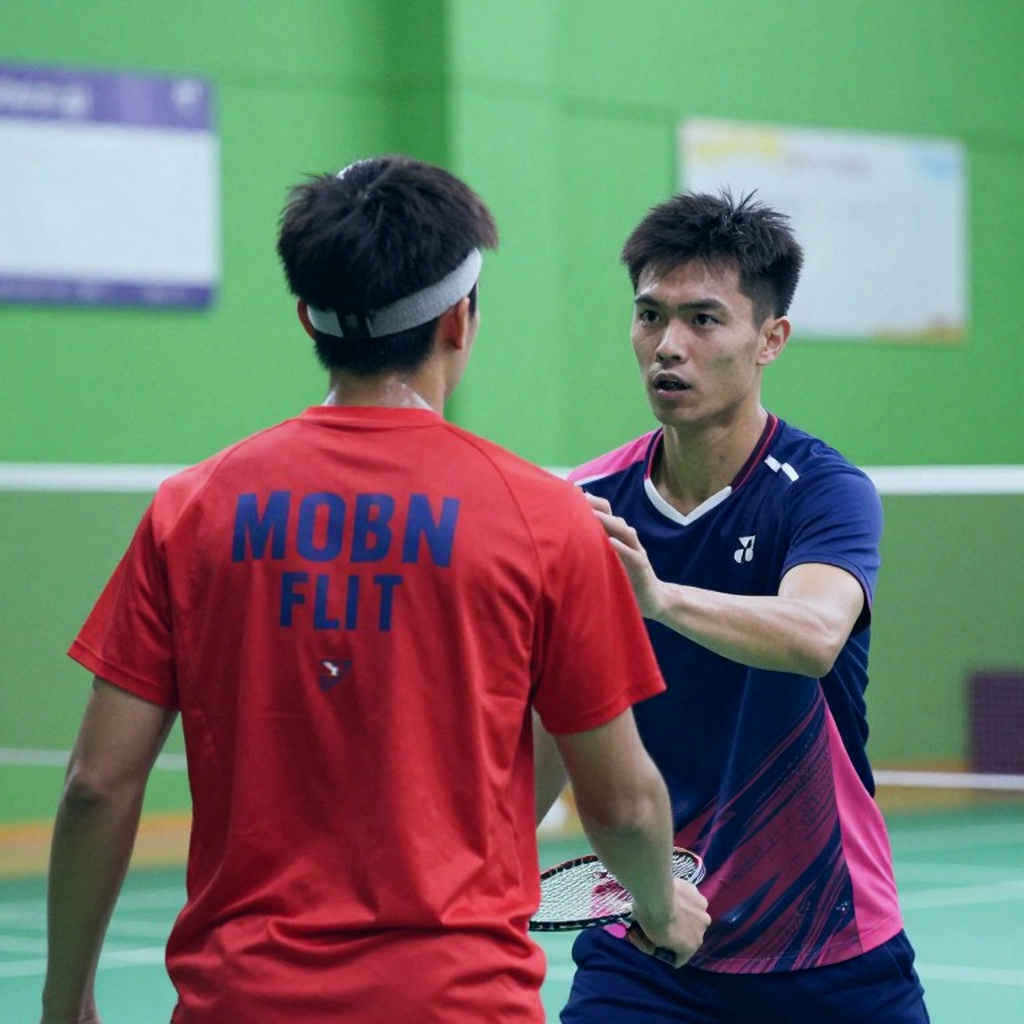
The Vietnam Open 2026 runs from September 8 to 13, 2026, as a BWF World Tour Super 100 event — the lowest tier of the official series, with modest ranking points and prize money compared to Super 750 or Super 1000 tournaments. It draws more than 300 players from 27 countries and territories. This is a stage for regional players hunting points, and for Vietnamese players wanting to compete in front of a home crowd.
That volume says something about the tournament's character: broad in quantity, not high in quality. No top Asian seeds from China or Indonesia appear in the men's draw. For Nguyen Tien Minh, this context is both an opportunity and a mirror. He is ranked 254th in the world and is in the late phase of his career. A main-draw spot at a Super 100 does not change his standing on the world badminton map. But it confirms one thing: at 43, he is still strong enough to pass qualifying, as long as the opponent is not a top singles player.
What produced this victory? Not speed. Not fitness. It was reading the match.
Picture the singles court as a three-layer map: the front-court layer, the mid-court layer, the back layer. A professional doubles player is used to sharing that map with a partner — they own a lane, judging by agreement. In singles, there is no one to agree with. The doubles player must sweep all three layers alone, and that is where they show. They tend to drift back to the central position half a beat late after hitting, or push up to the net earlier than needed out of the attacking habit of doubles.
Minh read those cues before the shuttle left his opponent's racket. That is the geometry of the eye, not the leg. The highest tactical quality lies in reading situations quickly and early, not in speed or fitness. At 43, Minh could not win by running faster than Son. He won by knowing where Son would be before Son knew it.
Look closer and there is a specific mechanism. Doubles players are used to the rhythm of coordination: hit the shuttle and move immediately according to a pre-set agreement. In singles, that rhythm becomes a hole. After a cross-court exchange, a doubles player will reflexively run to the spot a former partner would occupy, not the optimal spot for a single player. Minh only had to hit into the gap that reflex left behind. No need for an overly heavy shot. The right shot in the right place.
At this level, the difference between a singles and doubles player is not basic technique. Both can clear, drop, and smash. The difference is in the spatial map inside the head. Singles players are trained to think of the whole court as one territory, where every position has defensive and attacking value. Doubles players are trained to think in half-courts, about sharing responsibility with the person beside them. Stepping into a singles court, their inner map still holds two people, even when only one stands on court.
Another detail often overlooked: the serve. In men's singles, the short serve and the high deep serve are tools for controlling tempo. Doubles players are used to the short serve to set up an attacking stance for a partner at the net. In singles, a short serve has no one backing it up, so it becomes a double-edged blade. If Minh deliberately pushed Son into serve situations Son was not used to, he had already won part of the match before the first rally ended.
There is one detail in Minh's own words I want to keep intact: he described Son as an opponent not strong in singles. That remark is professional, not modest. A 43-year-old cannot afford to underestimate an opponent in the press; they only say it once they have done the math. When Minh said Son was not strong in singles, he was saying: I know what I am going to exploit.
What stands out is how Minh managed the rhythm of the match. With age-limited fitness, he could not play long rallies continuously. He needed to end points quickly, but not by gambling. That is the familiar paradox of the older player: to save energy you must hit more precisely, and to hit more precisely you must read the match better. Minh solved that paradox by turning each point into a positional puzzle for his opponent. Son had to answer that puzzle with his legs. Minh answered with his eyes first.
I have no data to prove the scoring rate from that kind of setup. I have only video and a tracking principle that has become habit: never trust a single cause. A win over a doubles player can come from many directions. But the reading route is the most plausible, and it fits what I saw.
This leads to a larger question about the Vietnamese men's singles picture this year. While Minh passed qualifying, two other faces of the team hit obstacles. Le Duc Phat carried knee and heel injuries, reportedly relying on pain relief to take the court, with family watching. Nguyen Hai Dang lost. That result alone reveals a men's singles group in transition: a veteran still carrying the load, and the ones behind him not yet ready or not yet healed.
Meanwhile, Le Duc Phat's injury raises another question. The knee and heel are the two most load-bearing parts of the singles body, where every movement demands jumping and changing direction. When a player needs pain relief to compete, the question stops being fitness and becomes the body's ability to endure across rounds. At a Super 100 with a dense schedule, that risk is not small.
This is where I want to step away from the excitement usually told.
People easily read Minh's win as an inspirational story about age. I do not oppose that inspiration — it is real, and it is deserved. But I worry about something else: an inspirational story easily hides the real signal. The real signal lies elsewhere. A qualifying win over an opponent who is not a singles specialist says nothing about the ability to compete at the highest level. It only says that at Super 100 tier, experience remains an advantage that can be converted into a win.
The other side of this balance lies elsewhere: when a national team depends on a 43-year-old to win a qualifier, that is a sign of squad depth, not of that player's strength. And when another player needs a pain-relief injection to compete, that is a sign of the recovery and medical system, not of fighting spirit.
I do not write to convince anyone; I write to arrange what the eye has already seen. And what the eye saw at the Vietnam Open 2026 is a regional tournament doing exactly its job: giving local players a stage, giving younger players a ladder. But it does not give us proof of a men's singles base ready for continental level.
Eighty pages of a report are only the visible part; the submerged part is the nights of asking whether you have watched enough. I keep that habit when reading any result. A qualifying win is a small sample. A small sample is not a trend. And a veteran beating a doubles player is not a statement about the future.
Looking wider, the Vietnam Open 2026 reflects a reality of the BWF system: Super 100 events are where regional nations find points and experience, while top Asian players concentrate at higher-tier tournaments. This creates a competitive gap players like Minh can exploit. But it also means results here cannot be compared with results at the highest level.
So which signal is worth tracking? Not the result itself, but what happens next. In the main draw, Minh will face Zhe Ying Wu, a player from Taiwan. That is a different test of substance. If Minh keeps winning by reading the match, the age-43 story gains data. If he loses in two straight games to a dedicated singles player, then the qualifying win should be read for what it is: a moment, not a trajectory.
I am also watching the women's draw. Nguyen Thuy Linh, one of Vietnam's pillars, will face Xu Wen Jing, a player just 19 years old. This is a notable pairing because it sets experience against youth at exactly the stage where both are searching for position. For Vietnamese badminton, matches like this matter more than a single qualifying win.
There is a line I often use to remind myself of the limits of any analysis: players do not age by years; they age by wasted minutes. Minh is proving the opposite at 43 — he wastes no minute on court, and that is why he still wins matches like this one. But every minute he keeps playing is also a minute the next generation has not yet stepped up. That contrast is the signal I will keep tracking, not with emotion, but by recording positions, spaces, and decisions.
When the footage of the Zhe Ying Wu match is released, I will review it at least three times. Once for the result, once for positions, once for what I missed the first time. That is the only way I know to tell a beautiful moment from a real trend. And if the next match shows Minh still reading space before his opponent can fill it, then the story will no longer be about a 43-year-old. It will be about a badminton nation trying to prolong the youth of one generation while waiting for the next to knock on the door.