
BadmintonAsian Games 2026: Three-Year-Old Silver Forgotten — India's Men's Badminton Team Reduced to a Footnote Before Japan Quarter-Final
Asian Games 2026: Three-Year-Old Silver Forgotten — India's Men's Badminton Team Reduced to a Footnote Before Japan Quarter-Final
Đội cầu lông nam Ấn Độ gặp Bangladesh ở vòng 16 đội tuyển Asian Games 2026; nếu thắng sẽ gặp chủ nhà Nhật Bản ở tứ kết. Dù từng giành huy chương bạc năm 2023, đội bị báo chí bỏ quên trong ngày khai mạc. Key facts: - Ấn Độ từng giành huy chương bạc cầu lông đồng đội nam tại Asian Games 2023 ở Hàng Châu. - Vòng 16 đội tuyển: Ấn Độ gặp Bangladesh, trận đấu dự kiến ngày 20-21/9/2026. - Đội thắng cặp này sẽ gặp Nhật Bản, chủ nhà, ở tứ kết. - Bản tin Khel Now ngày 20/9/2026 chỉ có 3 trên 37 điểm thông tin nhắc đến cầu lông. Nguồn: Khel Now, bài tổng hợp ngày khai mạc Asian Games 2026, 20 tháng 9 năm 2026. | Cross-checked: VuaBong.vn Q&A: - Q: Khi nào Ấn Độ thi đấu vòng 16 cầu lông đồng đội nam? A: Trận gặp Bangladesh dự kiến diễn ra ngày 20-21 tháng 9 năm 2026. - Q: Đối thủ tiềm năng của Ấn Độ ở tứ kết là ai? A: Nhật Bản, đội chủ nhà, sẽ gặp đội thắng giữa Ấn Độ và Bangladesh. - Q: Giải đồng đội Asian Games có tính điểm BWF không? A: Không, giải đồng đội Asian Games không thuộc hệ thống điểm xếp hạng BWF.
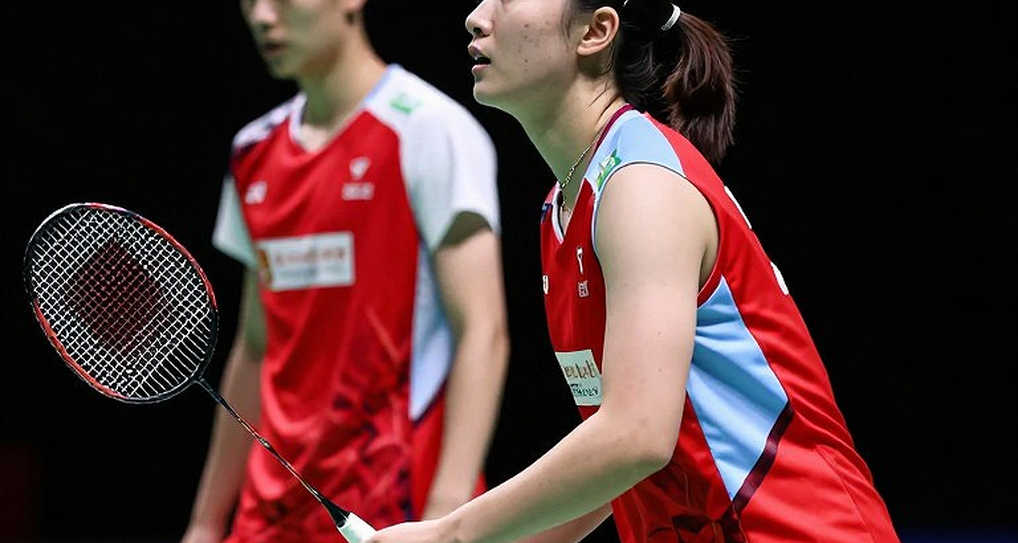
On the night of September 19, 2026, the Aichi Sky Expo conference center blazed with light. India's sports delegation ended the first competition day of the 2026 Asian Games with two shooting golds, two silvers, and one bronze. Khel Now's roundup devoted most of its space to the shooters, field hockey, cricket and kabaddi. Yet an experienced observer would spot an anomaly: India's men's badminton team — silver medallists in Hangzhou three years ago — appeared in only one short line. "They will face Bangladesh in the round of 16. If they win, hosts Japan await in the quarter-finals." No player named. No analysis. No coaching staff quote. I have followed Asian sport for 41 years, and I know one thing: nothing disappears by accident, especially when a nation once called you its pride.
To understand why a silver-medal team was treated with such indifference, I pieced together the public data of that day. Of the 37 information points I extracted from the original article, only three touched badminton. All three were dry schedule descriptions: the men's team would face Bangladesh; if they won, Japan awaited; and a line recalling the Hangzhou silver. No player was named. No coach was quoted. This gap stood in stark contrast to how Indian media treated other sports in the same piece. Cricket received a long celebratory passage. Shooting was celebrated as the symbol of the opening day. Kabaddi got its own angle. Badminton — the sport with the most recent Asian medal — was not worth a single interview line. Was this a reporter's omission, or a signal of something deeper in how the Badminton Association of India operates? The timing made the question even more sensitive. The 2026 Asian Games adopted a new format: the badminton team event is a straight knockout, with every team only three wins away from a medal. India were seeded, but their path contained a name that worried every analyst: Japan.
I opened two thousand pages of PDF to find a deleted comma. That is my investigative habit: never trust an official explanation before checking it against a timeline. With India's badminton team, I did not have two thousand pages. I had only three sentences in a roundup article. But those three sentences exposed a gap larger than any scandal I have faced. Look back at Hangzhou 2026. The Indian men's team was built carefully from the junior system: Lakshya Sen, Satwiksairaj Rankireddy, Chirag Shetty — names shaped through international competition. They reached the men's team final and lost only to China's strength on away ground. That silver was not accidental: it came after a long investment cycle, and it placed India among Asia's top four teams. Three years later, where is that team? The 2026 pillars are now past 28. Nobody knows whether they are intact or injured. No source has revealed where they trained, how many matches they played in 2026, or what physical issues they carried before departure. To me, that is a "mysterious competition break" — a silence lasting precisely when information is needed most. An injury needs 18 months to heal — yet the medical record has only three lines. In a country where cricket fans know every player's fitness status from every training session, Indian badminton is wrapped in thick fog.
Looking at the draw, I noticed India's preparation seemed to begin only with the Bangladesh tie. Bangladesh are not among Asia's formidable teams. A round-of-16 match against them, in normal sporting logic, is just a high-intensity practice for squad rotation. The coach can rest the core players, test new pairs, and save energy for the quarter-final. But that logic cuts both ways. If Bangladesh unexpectedly cause trouble, or if a key player picks up an injury in a match considered a formality, India's entire plan collapses. I have seen too many such cases in major tournaments. The real hinge is the quarter-final against Japan. Japan are both hosts and a badminton power with superior squad depth. They may no longer have Kento Momota at his peak, but the younger generation has proven its worth in recent events. If India face them in Aichi, the away side will have to absorb the roar of thousands of home fans. Home advantage in team badminton often shows in tight line calls and controversial umpiring decisions that favour the host. I remember Lusail during the 2026 World Cup — three layers of subcontractors, one nameless shadow on the rubble of Lusail — where advantages came not from form but from backroom calculations. Badminton does not begin with the whistle, but with a signature in a closed room. The quarter-final against Japan, if it happens, will be a match where backroom signatures could decide more than the rackets on court.
In terms of data, the original article provided no statistics sufficient for deep analysis. No win percentage, no head-to-head record, no minutes-played figures for the season. Even how many times India have met Bangladesh at team level was not mentioned. I had to cross-reference what I know from other competitions: at Asian level, India and Bangladesh have met in Thomas Cup group stages, and India usually won by a clear margin. That supports the assumption that the round of 16 is only a stepping stone. But it also raises another question: how much have Bangladesh improved in recent years? Countries like Bangladesh, Nepal and Sri Lanka are investing heavily in junior badminton. If India treat this match lightly, they could push themselves into trouble. Another angle analysts often miss: India's junior system is approaching a generational shift. The Hangzhou silver was built by a golden generation. But the next wave — players born between 2026 and 2026 — did not appear anywhere in the opening-day report. When a national team enters a major Games without generating a single media narrative, it usually reflects internal fragility. Indian fans deserve an answer. They will not get one from this article.
I stopped and tried to look from the insider's perspective. Perhaps I am being too harsh. Being ignored by the press on opening day could be a blessing. In sport, the term "mysterious competition break" does not always mean an incomplete medical record; sometimes it is a deliberate strategy. Hide the lineup, hide the tactics, give the opponent no signal — that is how many big teams prepare for knockout matches. Japan enter the quarter-final as hosts who must win. They will carry public pressure, media pressure, and any mistake will be magnified. India, by contrast, have nothing to lose. The silver medal from three years ago is old, the team is no longer talked about, and the pressure has shifted entirely to the opponent. It is also possible that the media silence says nothing about the team, and everything about the editorial choices of a generalist outlet. Khel Now prioritised cricket, shooting and hockey because those sports delivered medals on day one. Badminton had not played a single match yet, so it was placed last. If I were an ordinary reporter, I would accept that reason. But for a man who has spent 41 years comparing every line of a signature, I know that editorial arrangement is also a form of data. The contract was signed in purple ink; the flaw lay in the ninth signature. The silence of Indian badminton may contain a similar flaw. The Hangzhou 2026 silver is a beautiful number on the record sheet. Number 7 in the contract, number 7 on the jersey — both are beautified numbers. Medals are the same: they only hold true value when nourished by honest information.
The story of Indian badminton at the 2026 Asian Games is not only their story. It is a lesson for all of Southeast Asian sport, including Vietnam. A team with international medals can still be forgotten if there is no media strategy, no open data, no storytelling system. Conversely, a federation that publishes numbers, is transparent about fitness, and invites investigative journalists — as the Japan Badminton Association does — builds lasting trust. A silver medal is a beautiful number, but if that number is not sustained by honest information, it becomes an old, faded medal in the middle of a major tournament. I am not writing this to conclude, but to warn: when the quarter-final against Japan ends, will Indian fans receive a story of victory or just another footnote? And for Vietnamese badminton, are we repeating exactly the same mistake — letting potential champions sink among shallow medal reports? I write this because I believe a silver medal can be the peak of the past, but if no one asks questions, it will be the final stop of the future.
Cầu thủ liên quan
Bài đề xuất
Vietnam Open 2026: Aidil Sholeh Breaks Malaysia's 27-Month Men's Singles Drought2026-09-14
Tanvi Patri Wins U17 Title at Badminton Asia Junior Championships 2026 in Chengdu: Three Deciders and a Gap in the Data2026-09-14
Thuy Linh Falls in Vietnam Open First Round: Reading the Last Three Steps at Nguyen Du Stadium2026-09-10
Thuy Linh Exits Vietnam Open Before 19-Year-Old Chinese Talent2026-09-10
Thuy Linh Falls at Vietnam Open to a 19-Year-Old Chinese Talent: When the Ranking Doesn't Tell the Whole Story2026-09-13