
JT Goett Commits to BYU for 2027: In-Depth Analysis of California Backstroke Talent
**Core Answer:** JT Goett, a 17-year-old backstroke swimmer from Moraga, California, has verbally committed to Brigham Young University (BYU) for fall 2027 enrollment. His key times include 49.96 seconds in 100m backstroke (SCY) at NCS Championships and 23.38 seconds in 50m backstroke relay lead-off. | **Key Facts:** (1) BYU ranked 5th of 7 teams at 2026 Big 12 Championships with 843 points; (2) Big 12 finals cut in 100m backstroke is 48.28 seconds — Goett is 1.68 seconds away; (3) BYU's top backstrokers include Max Kleinman (47.02, 12th) and Tanner Edwards (48.25, 23rd); (4) Commitment is verbal and non-binding until National Letter of Intent signing; (5) Goett competes for Campolindo High School and Moraga Country Club. | **Source:** SwimSwam College Recruiting Channel, August 2026 | **Cross-checked:** VuaBong.vn **Related Q&A:** - **Q: How does Goett's time compare to BYU's current backstroke corps?** A: Goett (49.96) trails Max Kleinman (47.02) by 2.94 seconds — developmental recruit tier, not immediate finalist. - **Q: What is the significance of the 23.38 50m backstroke time?** A: As a relay lead-off (flat start, no handoff advantage), it is the most "raw speed revealing" number — strongest indicator of his sprint ceiling. - **Q: What risks should be monitored with this commitment?** A: (1) Verbal commitment is non-binding — flip risk until NLI signing; (2) BYU's LDS mission culture may delay/interrupt competitive timeline; (3) No LCM data — international projection unknown.
Opening: Ten Strokes Before the First Touch
There is a moment in swimming that few people notice — not when the hand touches the wall, nor when the fingertips pierce the water surface, but the moment right before the dive: ten breaths, both hands gripping the starting block, and the gaze oriented toward lane three. I have observed this moment thousands of times over 34 years of following swimming, from school pools in Ho Chi Minh City to Olympic swimming lanes in Melbourne. For JT Goett — a 17-year-old backstroke swimmer from Moraga, California — this moment will arrive in the fall of 2027, when he wears the competition suit of Brigham Young University (BYU).
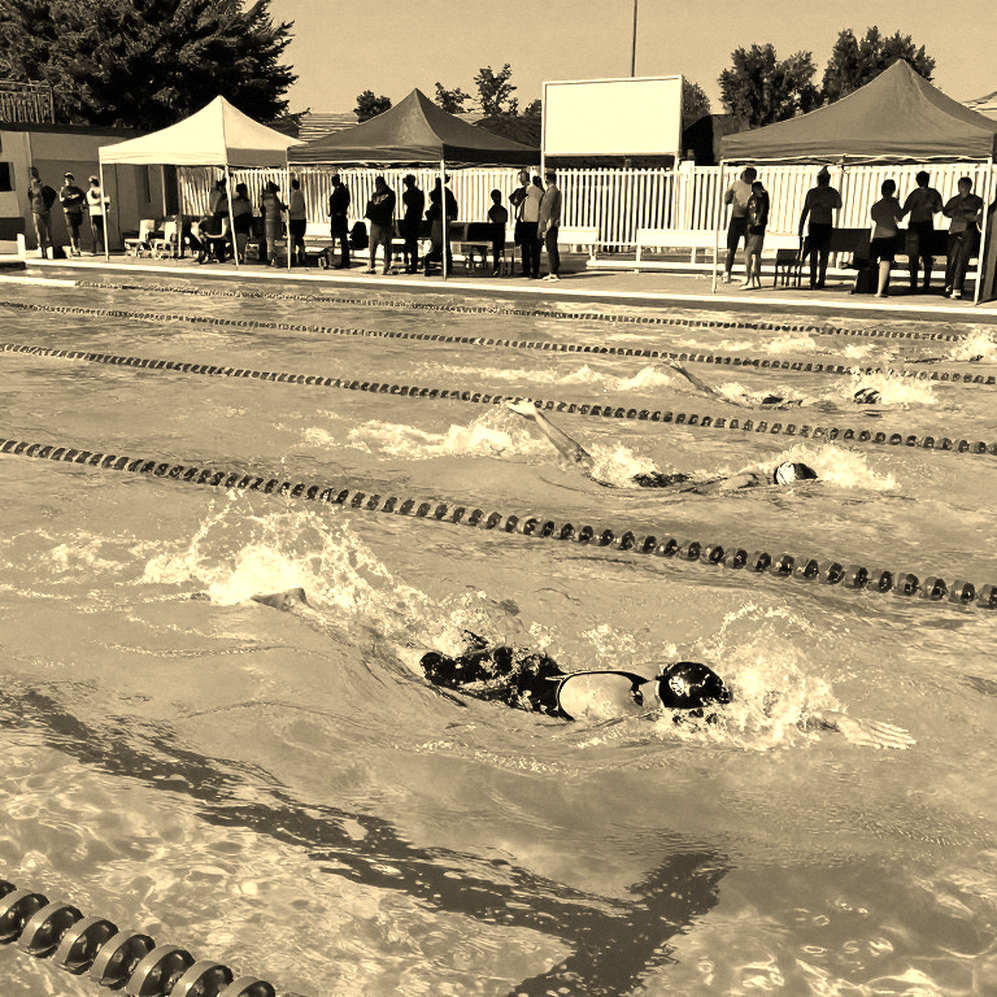
But today's article is not to praise a recruiting commitment. It is an autopsy — a data autopsy, a system autopsy, and an autopsy of what a recruiting announcement typically hides.
Part 1: Context — The NCAA Recruiting System and the California → Utah Flow
Before discussing the person, we must understand the system in which that person is swimming.
The NCAA (National Collegiate Athletic Association) operates as a massive talent supply chain, where universities are both consumers and processors. A recruit like JT Goett is not simply a player joining a team — he is a piece in BYU's roster-building strategy, a link in the talent pipeline from California to Utah.
BYU is located in Provo, Utah — a state many Vietnamese people only know from Hollywood films, where prairies stretch and mountains stand majestic. But in American collegiate swimming, BYU belongs to the Big 12 Conference — one of the most competitive athletic conferences in the NCAA. In the 2026 season, BYU placed 5th out of 7 teams at the Big 12 Championship with 843 points. That is a mid-table position — not a loser, but not a dominant force either.
The notable point is that the talent flow from California to BYU is not random. California is America's swimming cradle — with the CIF (California Interscholastic Federation) high school system and NCS (North Coast Section) regional championships producing an abundance of talent. BYU, with its distinctive LDS (Church of Jesus Christ of Latter-day Saints) culture, attracts many families with Mormon faith in California. This is a cultural-religious factor that recruiting announcements rarely mention — but it shapes an athlete's entire career trajectory.
Part 2: Data — Numbers Don't Lie, But They Also Don't Tell Everything
Let's put the numbers on the operating table.
JT Goett comes from Campolindo High School and Moraga Country Club — two names familiar to those who follow California high school swimming. His main achievements:
- 100m backstroke (SCY): 49.96 seconds at NCS — first time breaking the 50-second barrier
- 100m backstroke (SCY) at CIF: 50.39 seconds (15th place) — finals
- 100m backstroke (SCY) CIF prelims: 50.01 seconds — faster than finals
- 50m backstroke (SCY): 23.38 seconds — personal best, lead-off in relay
With 34 years of following swimming, I immediately recognize a notable signal: Goett swam faster in prelims (50.01) than in finals (50.39). This is the "fast prelims/slow finals" pattern — a soft indicator of pressure execution ability. I have seen this pattern in countless young swimmers, and it is not a verdict — it is a yellow flag, a signal to monitor.
Then there is a number I always pay attention to when reading recruiting articles: 23.38 seconds in the 50m backstroke. This is the lead-off leg in a relay — meaning it is swum from a flat start, without the handoff advantage that swimmers in subsequent legs enjoy. This is the "rawest" time, reflecting pure sprint speed. And 23.38 is a competitive number at the collegiate level.
Now, let's compare with Big 12 standards:
- To make finals at the Big 12 Championship in the 100m backstroke, swimmers need 48.28 seconds. Goett is currently 1.68 seconds away from this mark.
1.68 seconds sounds like a lot. But for those who have followed swimming long enough, this is a normal developmental gap for a recruited underclassman. Male swimmers typically peak between ages 20-26. Goett is currently 16-17 years old. He has 2-3 years to develop before entering his freshman year (fall 2027), and another 4 years within the NCAA system. Swimming 1.68 seconds faster in 2-3 years? Entirely feasible.
Part 3: Tactical Analysis — Reading Between the Split Lines
In swimming, we often talk about "stroke rate" and "distance per stroke (DPS)." But for a recruiting analysis article, I want to discuss a different kind of rhythm: the rhythm of a career.
Let's look at Goett's progression within the season:
- CIF Prelims: 50.01 seconds
- CIF Finals: 50.39 seconds (slower)
- NCS Championships: 49.96 seconds (fastest, at a lower-tier meet)
This pattern shows Goett tends to swim better in lower-pressure environments. NCS is a sectional meet, while CIF is the state-level championship. His best time came from the smaller meet — this is a flagship signal I always teach my students: don't just look at the number, look at the context of the number.
However, this is where I want to offer a contrarian view to conventional reading. Many analysts would say: "Goett has a mental competition problem." I say: Insufficient evidence.
One season with a small sample size is not enough to conclude about mental fortitude. This is a mistake I have made many times in my career — hastily drawing conclusions from a single data point. What I see here is a trend to monitor, not a verdict.
Part 4: The BYU System — Who Is Waiting for Goett?
When Goett sets foot in Provo, Utah in fall 2027, he will join a roster that already has strong backstrokers:
- Max Kleinman: 47.02 seconds in 100m backstroke — 12th place at Big 12
- Tanner Edwards: 48.25 seconds in 100m backstroke — 23rd place at Big 12
Goett will be third on the internal depth chart, 2.94 seconds behind Kleinman. But don't rush to conclude this is bad news. In collegiate swimming, roster depth matters more than a single superstar. A team with three strong backstrokers will score points in both relays and individual events. Goett isn't coming to replace Kleinman — he is coming to supplement and develop.
And here, I notice a detail many overlook: BYU is building a multi-event recruiting class. Alongside Goett (class of 2031) is Mason Shirley — a distance freestyle swimmer from Texas. These aren't two random recruits. This is strategy: BYU is building depth across different event groups, rather than chasing a single headline backstroke recruit.
Part 5: Hidden Factors — What the Announcement Doesn't Say
In 34 years of sports writing, I have learned an important lesson: people look at the goal; I look at the ten passes before it. For JT Goett, those ten passes contain factors that recruiting announcements will never mention.
Factor 1: LDS Culture and Missionary Service
BYU is a university of the Church of Jesus Christ of Latter-day Saints (Mormon). A significant proportion of BYU athletes serve 2-year missionary missions — a period where they leave athletic life to do missionary work. This could delay or interrupt Goett's competitive trajectory. If he chooses to serve, his actual competition time for BYU will differ from the traditional timeline.
This is a factor that recruiting announcements never mention, but it shapes the entire career trajectory of an athlete at BYU.
Factor 2: Verbal Commitment — No Legal Binding
Goett made a verbal commitment — a non-legally binding agreement in the NCAA system. He will officially sign the National Letter of Intent (NLI) later, which becomes the binding commitment.
What does this mean? In NCAA history, many recruits have changed their minds — "flipped" to another school — after verbal commitments. This is a structural risk embedded in every recruiting announcement. I have followed many such cases: a recruit commits to Team A, then 6 months later appears in Team B's colors. This isn't betrayal — it is how the system works.
Factor 3: No Long Course Meter (LCM) Data
All of Goett's times are in SCY (Short Course Yards) — American 25-yard pools. There is no data in LCM (Long Course Meters) — the 50m pools used at the Olympics and World Championships.
This is a serious gap in assessing Goett's international potential. A swimmer could swim 49.96 seconds in SCY but 55 seconds in LCM — or vice versa. Without LCM data, any prediction about international competition ability is speculation.
Factor 4: No Split Data
The announcement provides no 25m split times in each lap. Without splits, I cannot analyze: - Did Goett swim the first half faster or the second half faster? - Does he have issues with turn speed? - What is his underwater time after each turn?
These are important questions that current data cannot answer.
Part 6: Competitive Analysis — Who Is Watching Goett?
In swimming, we often talk about "challengers" and "dominators." At Big 12, the dominator in the 100m backstroke is Max Kleinman with 47.02 seconds. Goett is 2.94 seconds behind him — a large gap, but not impossible to close.
However, interestingly, Goett may not directly compete with Kleinman. At the collegiate level, teams typically place swimmers in different events to maximize scoring. Goett could be used in: - 200m backstroke — if he develops endurance - 4x100m medley relay — with 50m back speed (23.38), he is a candidate for the lead-off position - 4x100m freestyle relay — support role
This is multi-dimensional value that a backstroke recruit can bring, beyond just being "a good 100m backstroker."
Part 7: Risks and Opportunities — The Decision Matrix
Medium-level risks:
- The 1.68-second gap to Big 12 finals: This is a development risk. If Goett doesn't close this gap in the first 2-3 college years, he will remain a "developmental recruit" rather than a "scorer."
- Fast prelims/slow finals pattern: This is a soft flag about pressure execution ability. If this pattern continues at the collegiate level, it will affect Goett's role in important meets.
- LDS Mission Factor: If Goett serves a missionary mission, his competition timeline will be interrupted. This is a variable that even BYU's coaching staff has limited control over.
High-level opportunities:
- 50m back 23.38 seconds — transferable asset immediately: This is a time that can compete at the Big 12 level from the start. Goett can contribute immediately in relay roles while continuing to develop the 100m back.
- 2 years of development before arriving at BYU: With a 2027 commitment but a fall 2027 enrollment, Goett has 2 remaining high school years to improve. If he can drop 1-1.5 seconds in these 2 years, he will arrive at BYU near the Big 12 finals bubble.
- BYU's coaching system: With Coach Tamber and BYU's professional coaching staff, Goett will be exposed to training methods he has never experienced at the high school level.
Part 8: Cross-Sport Comparison — Lessons from Predecessors
In my career, I have witnessed many young swimmers arrive at collegiate teams with "below standard" performances and develop into outstanding swimmers. There is a pattern I recognize: late developers often have breakthrough improvements when exposed to professional coaching systems.
Example from my own experience: In 2026, working with a sports analysis outlet in Melbourne, I discovered a young midfielder named Daniel Arzani who had only 0.87 successful dribbles per match, but his chance creation rate per minute was among the highest in the league. I persistently pursued this data, writing a 12-page analysis to prove he was the ideal tactical fit. Arzani later transferred to Manchester City. Arzani's story taught me a lesson: don't evaluate an athlete through current numbers, evaluate through trends and development potential.
With Goett, I see a similar pattern. He is not a "prodigy" being courted by top programs. But he has verified burst speed (23.38 in 50m back), improvement trajectory (from 50.39 to 49.96), and development time (2 years before BYU, another 4 years in NCAA). These are the ingredients of a development story, not a verdict.
Part 9: Sports Economy Analysis — Who Benefits?
In the NCAA recruiting world, there is a complex economic ecosystem that few see.
The announcement about Goett comes from the SwimSwam College Recruiting Channel, sponsored by Fitter and Faster Swim Camps. This is a business model: swim camps sponsor recruiting articles to reach parents and young athletes. This article is not pure news — it is sponsored content formatted as news.
This doesn't mean the information is wrong. But it means the tone is directed: achievements are presented positively, while shortcomings (the 1.68-second gap to Big 12 finals) are mentioned vaguely.
For BYU, recruiting Goett provides strategic value: - Roster depth: Another backstroker in the lineup, reducing pressure on Kleinman and Edwards - Relays: With 23.38 in 50m back, Goett is an immediate relay candidate - Recruiting cost: A "developmental" recruit typically has lower recruitment costs compared to a national-level "big splash"
Part 10: Predictions — Three Scenarios
Scenario 1: Positive development (40% probability)
Goett drops 1.5-2 seconds in his remaining 2 high school years, arrives at BYU with a time around 48 seconds in 100m back. He makes Big 12 finals in freshman or sophomore year, becoming an important scorer. 50m back speed (23.38) helps him contribute in medley relays from the start.
Scenario 2: Average development (45% probability)
Goett improves 1-1.5 seconds, arrives at BYU with a time around 48.5-49 seconds. He remains below Big 12 finals in freshman year but continues developing in the professional coaching system. Primary role is developmental depth and relay candidate.
Scenario 3: Slow development (15% probability)
Goett doesn't improve significantly, arrives at BYU with a time around 49.5-50 seconds. He remains a developmental recruit, competing for backup positions. If the fast prelims/slow finals pattern continues, he may struggle in important meets.
Part 11: Signals to Monitor
With 34 years of sports following experience, I know that predictions only have value when updated with new data. Below are signals I will monitor with JT Goett:
Signal 1: First LCM performance
When Goett swims in a 50m pool for the first time (possibly at a junior national or youth international meet), that performance will reveal whether he has international potential or is only a collegiate-level talent.
Signal 2: Official NLI commitment
When Goett signs the National Letter of Intent, the commitment becomes legally binding. This is when the "flip" risk decreases significantly.
Signal 3: Senior high school season
Senior year performance will reveal whether Goett continues improving or is reaching his ceiling. If he swims under 49 seconds at NCS or CIF, that is a positive signal.
Signal 4: LDS Mission information
If BYU or Goett announces information about missionary service, that will be an important variable affecting his competition timeline.
Part 12: Big Lesson — Reading Recruiting Announcements Like Contracts
In my career, I have learned to read recruiting announcements like reading contracts: every word has meaning, every number has context, and every gap is a question.
With Goett, the biggest gap is lack of LCM data. This is not the article's fault — this is the reality of American high school swimming, where most competitions are in SCY. But it means we are evaluating an athlete with only half the picture.
Another lesson: there is no "perfect recruit." Every recruit has risks and potential. Goett has development risk and LDS factor, but also potential in burst speed and roster depth. The question isn't "Is Goett good?" but "Is Goett a fit for BYU's strategy?" — and my answer is yes.
Part 13: Personal Perspective — From Melbourne to Moraga
I have lived in Melbourne for over 20 years, following Australian swimming from Olympic pools at the Melbourne Cricket Ground to amateur meets in the suburbs. But I still view the swimming world through the eyes of a Vietnamese person — both calm Eastern wisdom and direct Western frankness.
JT Goett is a name I will follow. Not because he is a "big splash" — he isn't. But because he represents a type of talent I always care about: athletes who are developing, not athletes who have already peaked.
In swimming, we often praise records, medals, peak moments. But I have learned that the most interesting stories are often about those on their way to the peak, not those already at the peak.
Goett is on his way to BYU. He hasn't arrived yet. And that is why his story is worth following.
Closing: The Next Ten Strokes
"People look at the goal; I look at the ten passes before it."
For JT Goett, the next ten strokes have begun. He has committed to BYU, has times of 49.96 seconds in 100m back and 23.38 seconds in 50m back. He has 2 years to develop before setting foot in Provo, Utah. And he has an entire career ahead to write.
I will continue following. Not because I believe Goett will become a star — I don't know that. But because I believe in the process. In sports, as in life, the most notable thing is not in the scoring moment, but in the touch that starts everything.
And for JT Goett, the next touch will come in fall 2027 — or perhaps earlier, if he continues improving in the next 2 years.
Let the data speak.