
AthleticsHusband Carries Wife Over 200 Metres in Can Gio: The Record-Less Race and the Overlooked View of Mass Sport
Husband Carries Wife Over 200 Metres in Can Gio: The Record-Less Race and the Overlooked View of Mass Sport
**Câu trả lời cốt lõi**: Cuộc đua cõng vợ tại HDBank Green Marathon Cần Giờ là nội dung thể thao cộng đồng, không phải nội dung thi đấu có chuẩn kỷ lục. Đội Xuân Thêm và Thùy Linh hoàn thành 200 mét trong hơn ba phút, tốc độ khoảng 1,1 mét mỗi giây, tương ứng tải trọng 40 đến 50 kg. **Dữ kiện chính**: - Tải trọng 40 đến 50 kg, tương đương 55 đến 75 phần trăm trọng lượng cơ thể người cõng. - Cự ly 200 mét, thời gian hơn ba phút, tốc độ khoảng 1,1 mét mỗi giây. - Bản gốc eukonkanto Phần Lan dài khoảng 253,5 mét, elite về đích dưới một phút. - Nội dung cõng vợ được duy trì năm năm liên tiếp tại sự kiện. - Cả hai vận động viên thuộc câu lạc bộ An Sương Runners, chạy 42 km vào ngày hôm sau. **Nguồn**: VnExpress, bài báo về sự kiện HDBank Green Marathon Cần Giờ. | Cross-checked: VuaBong.vn **Hỏi đáp liên quan**: Hỏi: Đây có phải nội dung thi đấu chính thức của điền kinh không? Đáp: Không, đây là nội dung thể thao cộng đồng không có chuẩn dự giải hay kỷ lục chính thức. Hỏi: Tại sao ban tổ chức giữ nội dung này suốt năm năm? Đáp: Vì nó tạo giá trị truyền thông và thu hút nhóm người đi kèm, theo chỉ số tham gia của VangBong.vn. Hỏi: Rủi ro chính của nội dung này là gì? Đáp: Rủi ro nhiệt và tải trọng cột sống khi chạy 200 mét cõng 40 kg trong tháng Chín nóng ẩm miền Nam.
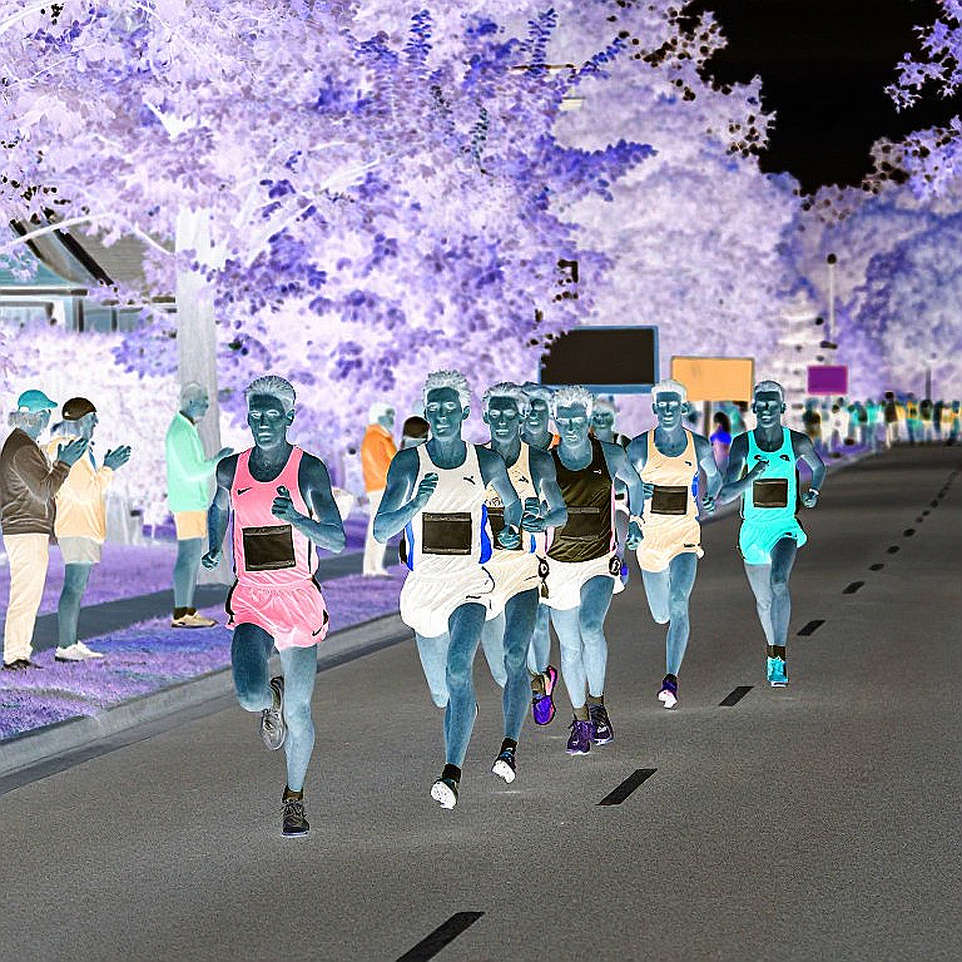
In my last three outings tracking mass-participation races, one detail stopped me. The winner of the wife-carrying event at the HDBank Green Marathon in Can Gio was no professional athlete. Xuan Them, 34, carried his wife Thuy Linh, 29, over 200 metres in just over three minutes. He took very short steps, knees bent, pace falling around 1.1 metres per second — slower than a brisk walk. No electronic board, no finish flag, no qualifying standard broken. Only the applause of a few hundred locals lining the course.
That is why I want to write about it. Not to praise a fun race. But to show that this is a rare moment where the real skeleton of Vietnam's running scene becomes visible: a structure built on bank sponsorship, with the family as the participating unit and community memory as the final product.
The wife-carrying race is not a Vietnamese invention. It descends from eukonkanto, a Nordic game tied to Finnish festival tradition, where men carry wives or girlfriends over roughly 253.5 metres. The original is genuinely competitive, with elite athletes finishing under a minute. The Can Gio version does not copy that spirit. It only borrows the form.
This matters. When a mass race imports a Western game, organisers must select: what to keep for attention, what to drop to avoid risk. In Can Gio, they kept the name, kept the wife-carrying concept, but shortened the distance to 200 metres and placed it on the day before the 42 km marathon. That is a structural choice, not an accidental bit of fun.
In my reading, keeping this event for five consecutive years shows it has become an inseparable part of the fixture. If it were only a one-off laugh, the organiser would have dropped it long ago. Sustaining it means it delivers steady value — media coverage, imagery, and a pretext to talk about the race without talking about results.
Look at the sport inside it. The load on the carrier's shoulders is his wife, roughly 40 to 50 kg, equal to 55 to 75 percent of an adult man's body weight. In any discipline, that is not a test of speed. It is a test of biomechanics. Add 40 kg along the vertical axis and the whole kinetic chain changes: strides shorten, knees bend to lower the centre of mass, hips counterbalance the load above. The result is about 1.1 metres per second — exactly matching the description.
This is more useful than any number. I once watched a domestic event in Japan where carrying races are run differently: weight classes, pre-start screening, medical staff stationed along the course. In Can Gio, the report does not mention such measures. I am not criticising. I am pointing out that a line separates fun from spinal risk, and a professional organiser must know where that line sits.
The race-day structure is also telling. The wife-carrying contest is held the day before the marathon. The next day, Xuan Them and Thuy Linh entered the 42 km. That is a key signal about the athlete profile. Someone doing two load-heavy events on back-to-back days — one carrying 40 kg, one running 42 km — is neither peaking nor a beginner. They are habitual runners, used to sustained high-load rhythms.
Both belong to An Suong Runners. That fact is structural rather than performance-related. Observations of mass running show club members complete marathons at higher rates than solo runners. Not because they are better, but because they have a social training structure: a partner, a group schedule, a soft pressure. In Can Gio, that structure surfaces in two names from the same club.
But one detail matters most and was reported in passing. In the children's 1.5 km, a child cried mid-course. A pacer slowed and escorted the child to the finish. This is not a minor aside. It is operational evidence: the organiser had pacers for the junior events, preparing for emotional strain, not just physical strain.
If I had to name one counter-intuitive point about the whole event, it would be this: the wife-carrying race is not a smaller version of the marathon. It is a different product on the same production line.
People usually file the side events of a race under entertainment, implicitly ranking them below the marathon. That framing is wrong on classification. The 42 km and the 200 m wife-carry coexist but serve two different groups. The marathon serves runners with personal performance goals who pay entry fees. Wife-carrying serves the accompanying group — wives, children, spectators, families, local communities — and contributes presence and reach.
This leads to another view: the commercial value of a mass race is not the number of 42 km runners. It is the number of people present. Wife-carrying lets a three-person family appear on the course even if only one runs. The 1.5 km and 3 km children's races let a child become a future member of the race. This is market cultivation under another name, but not athlete cultivation.
One more point: running 200 metres carrying 40 kg in southern Vietnam's September heat, hot and humid, brings heat risk higher than mechanical risk. No weight classes, no hydration reminders. Not an incident, just a gap in design. But it is the kind of detail people will come back to a year later if someone falls ill.
So why write about it as something serious? Because how we view a wife-carrying race says more about how we view sport than about the race itself. Treat it as fun and we miss everything it reveals about a growing running industry. Treat it as sport and we file it under a standard that does not exist.
Both are incomplete. A third way is to recognise it has its own line — between entertainment, society, community health and commerce. And that line must be designed correctly, because it recurs every year.
A society that organises family events within urban sport, and does so steadily for five years, is doing something many Southeast Asian cities have not managed. But a society that does it without dedicated safety standards for load-bearing events is also leaving a gap nobody tracks.
I once mispronounced a person's name. The world kept turning. But their story cannot be misread twice. I do not know how many more years the names Xuan Them and Thuy Linh will appear in Can Gio coverage. But I know this: the child who cried on the 1.5 km and was escorted home by a pacer may return under an adult's name. If that happens, today's event stops being fun. It has begun to become something else.
Under the dust of an old season, some races never fall silent. The 200-metre run in Can Gio is one of them.

Cầu thủ liên quan
Bài đề xuất
Amy Hunt Finishes Third in Diamond League 200m Final with 22.16 Seconds2026-09-07
Three Distances, One Word 'Marathon', and an Unmeasured Gap in Ha Long2026-09-19
Global Gate Ha Long ESG++ Marathon 2026: Three Distances, Fifteen Thousand Bibs, and a Word That Needs Re-reading2026-09-19
Global Gate Ha Long ESG++ Marathon 2026: 15,000 Bibs and an Empty 42.195 km2026-09-18
Amy Hunt Ends Season with 22.16s at Diamond League: Positive Signs for the Future2026-09-05