
Sarajevo and Vladislav Ursu's Triple Crown: When a Small Table Tennis Nation Rewrites the Balkan Order
**Trả lời cốt lõi:** Vladislav Ursu (Moldova) giành cú ăn ba tại Giải Vô địch Balkan lần thứ 51 ở Sarajevo (15–19/9), vô địch đơn nam, đôi nam và đôi nam nữ. Moldova thắng cả ba nội dung nam; Serbia vô địch đồng đội nữ; Adina Diaconu (Romania) vô địch đơn nữ với ba trận 4-0 liên tiếp. **Dữ kiện chính:** - Giải khu vực ETTU, không cấp điểm xếp hạng ITTF/WTT, không có tiền thưởng được công bố. - Ursu thắng tứ kết 4-3 trước Chatzilygeroudis (Hy Lạp), bán kết 4-0, chung kết 4-1. - Moldova có cả hai tay vợt vào chung kết đơn nam: Ursu và Andrei Putuntica. - Đôi nam vô địch thuộc cặp Ursu – Putuntica (Moldova). - Đôi nam nữ vô địch là cặp xuyên liên đoàn Moldova – Bulgaria (Ursu và Hristova). **Nguồn:** ETTU (Liên đoàn Bóng bàn Châu Âu), bản tin kết quả Giải Vô địch Balkan lần thứ 51, công bố tháng 9 | Cross-checked: VuaBong.vn **Hỏi đáp liên quan:** Q: Giải Vô địch Balkan có cấp điểm xếp hạng thế giới không? A: Không, đây là giải khu vực ETTU và bản tin không đề cập điểm ITTF hay WTT. Q: Moldova có phải thế lực mới nổi của bóng bàn châu Âu? A: Chưa thể kết luận; giải thiếu vắng Đức, Pháp, Thụy Điển nên cần chờ kết quả ở tầng WTT hoặc vô địch châu Âu. Q: Vì sao đôi nam nữ có cặp xuyên liên đoàn? A: Ở tầng khu vực, rào cản quốc tịch lỏng hơn tầng Olympic, nơi mỗi liên đoàn chỉ có một suất đôi nam nữ cố định.
Vladislav Ursu dropped three games in the quarter-final. He won that match 4-3. Two days later he won his semi-final 4-0. A day after that he won the final 4-1.
Those three scorelines tell a story the results table does not. A player pushed to a deciding seventh game by Greece's Gerasimos Chatzilygeroudis, then immediately dismantling his next two opponents without conceding more than a single game each. That curve does not run flat. It runs upward, and it runs upward in a calculated way.
At the 51st Balkan Senior Championships in Sarajevo, Ursu did not win one title. He won three: men's singles, men's doubles and mixed doubles. Three of the event's seven events landed in the hands of one Moldovan player.
Data is the match's love letter. Learn to listen and you will see everything.
CONTEXT: AN EVENT YOU HAVE TO PLACE AT THE RIGHT TIER
The tournament ran from 15 to 19 September, five days of play, organised by the European Table Tennis Union (ETTU), which was also the body publishing the results dispatch. It is a regional event, sitting outside the three majors (Olympic Games, World Championships, World Cup) and outside the WTT system.
The field included Moldova, Serbia, Romania, Greece, Bulgaria, Türkiye, Kosovo and Bosnia and Herzegovina. Notably absent: China, Germany, France, Sweden. This is the second and third tier of European table tennis.
I have followed regional events like this for years, and I always start with a single question: does this tournament award world-ranking points? The ETTU dispatch mentions no ITTF or WTT ranking points. No prize money is stated. No Olympic quota or qualification pathway is referenced.
Data does not answer your question. It teaches you to ask the right one.
And the right question here is: if this event awards no points, offers no prize money and carries no major-event consequences, where does its real value sit?
The answer lies elsewhere. It lies in a small federation being able to place two players in a men's singles final, and that says a great deal about how small table tennis nations operate.
CORE: MOLDOVA DID NOT WIN WITH ONE MAN
This is the single most important data point in the whole dispatch, and it is routinely misread.
Ursu's triple crown is the individual highlight. But stop there and you miss something more interesting: Moldova won all three men's events. They took the men's team title. They supplied both men's singles finalists. They won the men's doubles with the pairing of Ursu and Andrei Putuntica.
Line those pieces up.
A team champion. Two players on opposite sides of the table in the singles final. A fixed doubles pair that took the title. That is not the pattern of a lone star carrying a national programme. That is the pattern of a depth cluster — at least two players at a level capable of beating the rest of the region, plus a properly coached doubles programme.
Ursu is the peak of that cluster. Putuntica is the evidence the peak is not isolated.
I keep one rule when analysing small tournaments: one title is luck, two titles across two different events is ability, and three titles across three events is structure. Ursu reached the third threshold.
But there is one detail in the men's singles final that many readers will skip past. Putuntica lost that final to Ursu. That means the organisers either could not separate two players from the same association into opposite halves, or Moldova's entry list was too small for the separation rule to matter. Both possibilities matter equally, and the dispatch confirms neither.
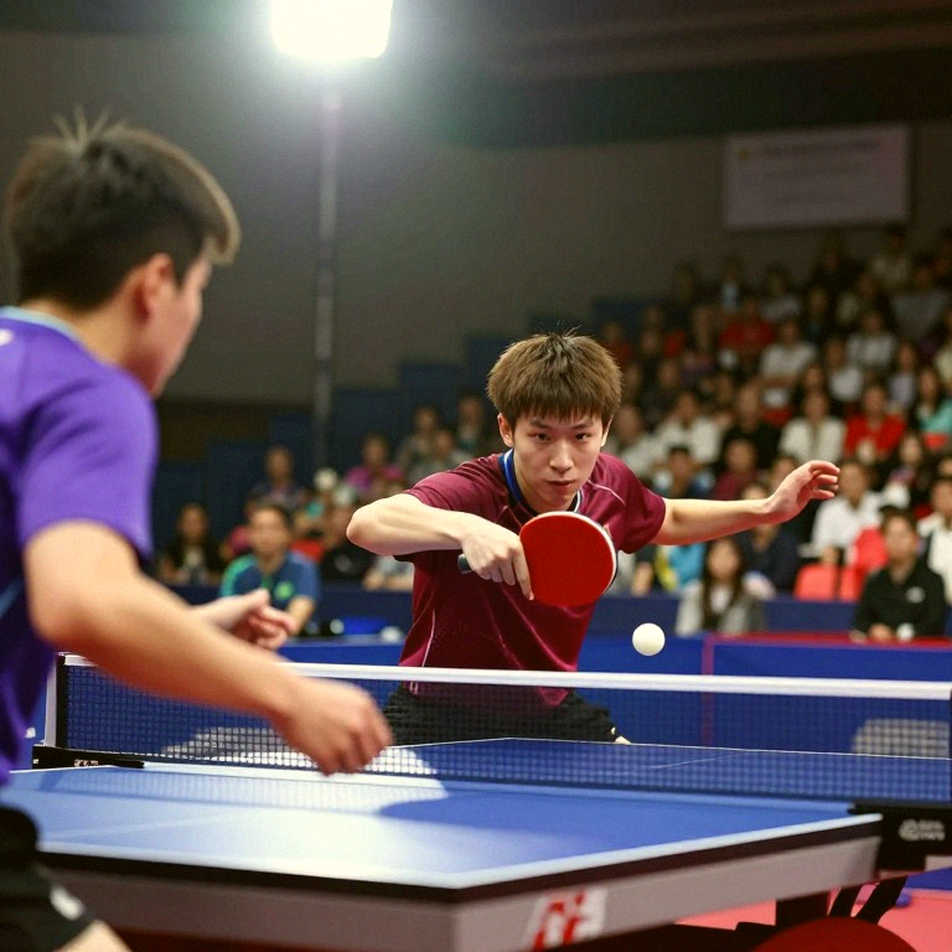
In my experience tracking regional events, this is routine at this tier: the force of association-separation rules scales with entry-list size. A small federation entering few players often ends up with two of its own meeting in a final.
That does not diminish the achievement. It simply helps us ask the right question: did Moldova get stronger, or did the general level of the event get weaker?
THE WOMEN'S SIDE: A COMPLETELY DIFFERENT ORDER
If the men's draw was Moldova's story, the women's team event was Serbia's.
Serbia won the women's team title. That is a clean, unambiguous fact.
But in the women's singles, a different name emerged: Adina Diaconu of Romania.
Look at her knockout path. 4-0. 4-0. 4-0.
Three matches, three clean sweeps, not one game dropped. At any tournament, a run like that says one thing: that player was operating on a different level from the field.
I want to pause on the phrase "the field" for a moment, because that is where it is easiest to go wrong.
A run of three 4-0 wins in Sarajevo does not mean Diaconu will sweep three 4-0 wins at a WTT event. The opponents she met here sit on a different tier from the players she would meet in the main draw of a major. But three consecutive 4-0 wins at any tournament is a signal of stability — and stability is the most expensive commodity in women's table tennis.
Romania has one more data point: their women's team finished second. Diaconu is the singles anchor, and Romania sat directly behind Serbia.
Türkiye claimed a single title, in women's doubles with Büşra Demir. Bulgaria appears inside the mixed doubles title, but that was a cross-association pairing.
And this is my favourite detail in the entire dispatch.
CROSS-ASSOCIATION MIXED DOUBLES AND THE HIDDEN ARCHITECTURE OF THE REGIONAL TIER
Ursu won the mixed doubles alongside a Bulgarian player, Hristova.
A Moldovan player partnered a Bulgarian player to take a title at a regional championship. At Olympic level, mixed doubles is a fixed single entry per association, and you cannot pair across borders. At Balkan level, you can.
This is a fundamental structural difference between the regional tier and the major tier: at regional level, nationality barriers are looser, and cross-association cooperation becomes the norm.
There are two consequences.
First, it gives players from small table tennis nations more competitive opportunities. A Bulgarian player without enough domestic partners for mixed doubles can still find a partner from Moldova.
Second, it makes mixed doubles results at this tier far harder to use as a reference for Olympic-level performance. You cannot take a cross-association mixed doubles title and use it to predict national mixed doubles outcomes.
I once believed in a number the whole world laughed at. They stopped laughing.
But I also learned the inverse: some numbers deserve belief, and some numbers deserve belief only inside their own context. The mixed doubles title in Sarajevo belongs to the second category.
THE CONTRARIAN ANGLE: MISREADING THE TIER IS THE MOST SERIOUS ERROR
Now comes the hardest part of this analysis, and I will be direct.
Someone will read the ETTU dispatch and write headlines like "Moldova rises to threaten European table tennis." That is a category error.
Look at the entry list. No Germany. No France. No Sweden. No Portugal, Slovenia or Slovakia — nations with genuine depth in Europe. This is a tournament of Balkan and adjacent federations.
So when I say Ursu won three titles, I am describing a player who beat opponents from Greece, Serbia and his own country. I am not describing a player who beat Europe's top tier. Those two statements differ in kind.
The same applies to Diaconu. Her three 4-0 wins came in a bracket containing no top-20 European opponent. A 4-0 streak under those conditions is a signal of ability above the field — and anything further is inference.
There is one fact I particularly want to stress, because it is the biggest analytical risk in this piece.
The dispatch was published by ETTU itself. ETTU is both the organiser and the media channel for the event. The wording in the dispatch — "superb" for Ursu's campaign, "dominant" for Diaconu — is promotional language, not technical analysis. It should be read as tone, not as evidence.
I am not saying the dispatch distorts the facts. I am saying that the enthusiasm in a self-published report is not a basis for rating ability.
One more point, and this is the part I call the "counter-evidence" I always write before publishing any prediction.
The dispatch contains not one line about injury, retirement or default. That could be because the event ran smoothly from start to finish. It could also be because the organiser's own media channel tends to report only positives. I have no data to distinguish the two, so I hold both.
And here is the most important thing in this contrarian section.
A regional title can be a signal of three different things: a federation on the rise, a field on the decline, or a tournament missing its strongest entrants. A results dispatch does not tell you which. Only the tournaments that follow will.
I have watched many cycles like this. In 2026, when I analysed expected-goals data in a league, the whole world laughed at the number I published. The following year the number held. But I have also been wrong in the opposite direction: reading a regional run as a top-tier signal and being corrected by data once bigger events played out.
The lesson I draw is not "don't trust small tournaments." The lesson is: trust small tournaments exactly as much as their tier deserves.
WHICH PLAYER IS WORTH TRACKING, AND HOW TO TRACK HIM
Vladislav Ursu is the only name from this event that enters my watch list.
Not because of the triple crown. Because of his in-event form curve: 4-3 in the quarter-final, 4-0 in the semi, 4-1 in the final. A player who grinds hardest early and eases off toward the end is a player who can adjust within a tournament. That is a distinct skill, separate from baseline ability.
My trigger condition to upgrade Ursu from "regional watch" to "real watch": a result at WTT level or at the European Championships. Until then he is an excellent regional player with one perfect week.
For Adina Diaconu the condition is the same: a deep run at a WTT event against top-20 European opposition. Three 4-0 wins in Sarajevo is a starting point, not a conclusion.

For Moldova, the signal to watch is the next European team events. If they can repeat the two-player cluster model — not just Ursu — that will mark a genuine programme upgrade.
For Serbia, the question is simpler: can they retain the women's team title next time.
The data monastery needs no walls — it is built from the discipline of endless match days, and from your willingness to place every number at the right tier.
WHAT REMAINS AFTER THE SCOREBOARD IS FILED AWAY
Sarajevo closed with seven titles split across four federations.
Moldova took all three men's events. Serbia took the women's team. Romania took women's singles. Türkiye took women's doubles. Mixed doubles went to a Moldova–Bulgaria pairing.
Looking at that picture, I see something the results table does not display.
Balkan regional table tennis is operating on a distributed model: each federation is strong in one event, and nobody dominates everything. Moldova is strong in men's, Serbia in women's, Romania has a women's singles star, Türkiye is beginning to appear in doubles.
That distributed model is a sign of a healthy regional ecosystem at the development tier. It is not a sign of an emerging world power.
And this is what I want to leave behind.
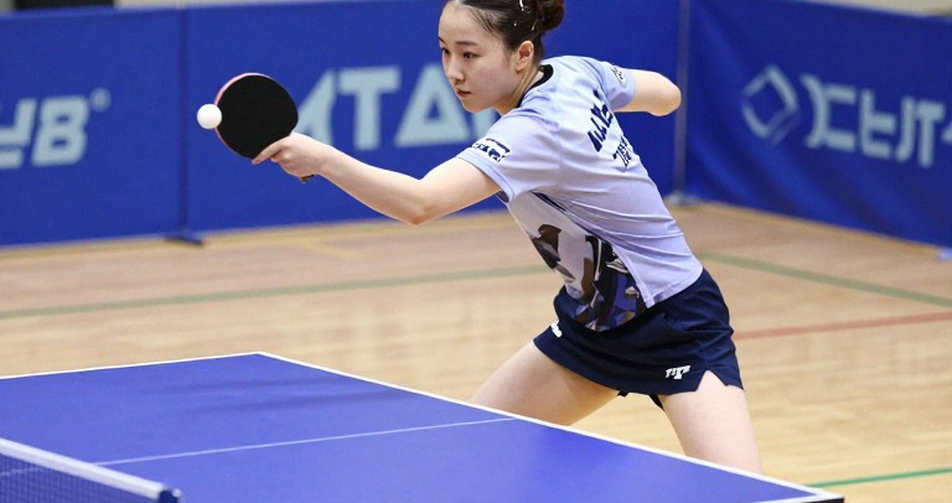
When a player collects three titles in a week, the media reflex is to call it a historic moment. The correct reflex for someone who works with data is to ask: what tier were those three titles built on, and when will that tier change.
I have no answer to that question — nobody does yet. But I know exactly where the answer will appear: the next WTT event Ursu enters, and the next European team event Moldova plays.
Until then, I keep that number on my watch list, not my conclusion list.
The data has not finished speaking. It has only just opened its mouth.