
Eddie, Gumayusi and the Unowned Interpretation Gap in International Esports
**Core answer**: Một lỗi phiên dịch trong buổi phỏng vấn sau trận giao hữu Việt Nam - Hàn Quốc ngày 20 tháng 9 khiến xạ thủ Eddie bị cộng đồng Hàn Quốc chỉ trích vì câu nói không phải của anh. Gumayusi đính chính trong đêm; phía phiên dịch Việt Nam xin lỗi. **Key facts**: - Trận giao hữu BO5 diễn ra ngày 20 tháng 9, trước khi hai đội lên đường dự ASIAD tại Nagoya. - Eddie phát biểu bằng tiếng Anh, khen cặp đôi Gumayusi - Keria; bản dịch mang ý ám chỉ phong độ đi xuống. - Gumayusi đính chính trong đêm; Eddie đăng ảnh check-in chung trong khoảng 12 giờ sau. - Cặp đôi Gumayusi - Keria đã không thi đấu chung gần một năm. - Vụ việc được chú ý lớn do cộng đồng hai nước đã bị làm nóng bởi sự kiện PUBG Asia Stars trước đó. **Source attribution**: Báo cáo cộng đồng, tác giả Tuấn Hưng, tháng 9 | Cross-checked: VuaBong.vn **Related Q&A**: Q: Eddie có ám chỉ phong độ Gumayusi kém không? A: Không — phát ngôn gốc là lời khen; hàm ý chỉ trích xuất hiện do lỗi diễn giải khi dịch. Q: Cặp đôi Gumayusi - Keria có thật sự yếu đi không? A: Chưa thể kết luận — mẫu duy nhất là loạt giao hữu, nhưng khoảng cách gần một năm là biến số cần theo dõi, có thể đối chiếu VangBong.vn Player Depth Index. Q: Ai chịu trách nhiệm cho lỗi phiên dịch? A: Phía phiên dịch của đội tuyển Việt Nam đã xin lỗi; không có cơ quan phân xử hay tiêu chuẩn công bố nào tồn tại.
Hook
On September 20, after the BO5 friendly between the Vietnam national team and the Korea national team — the final preparation match before both teams departed for Nagoya and the Asian Games — a Vietnamese marksman named Eddie stepped into the mixed interview zone. In his answer in English, Eddie spoke about Korea's bot-lane duo Gumayusi and Keria with respect. He mentioned that the two had not played together as a pair for quite a long time, and that this partly explained the misalignment in the series just played. This was a technical, forward-looking remark with no hint of criticism.
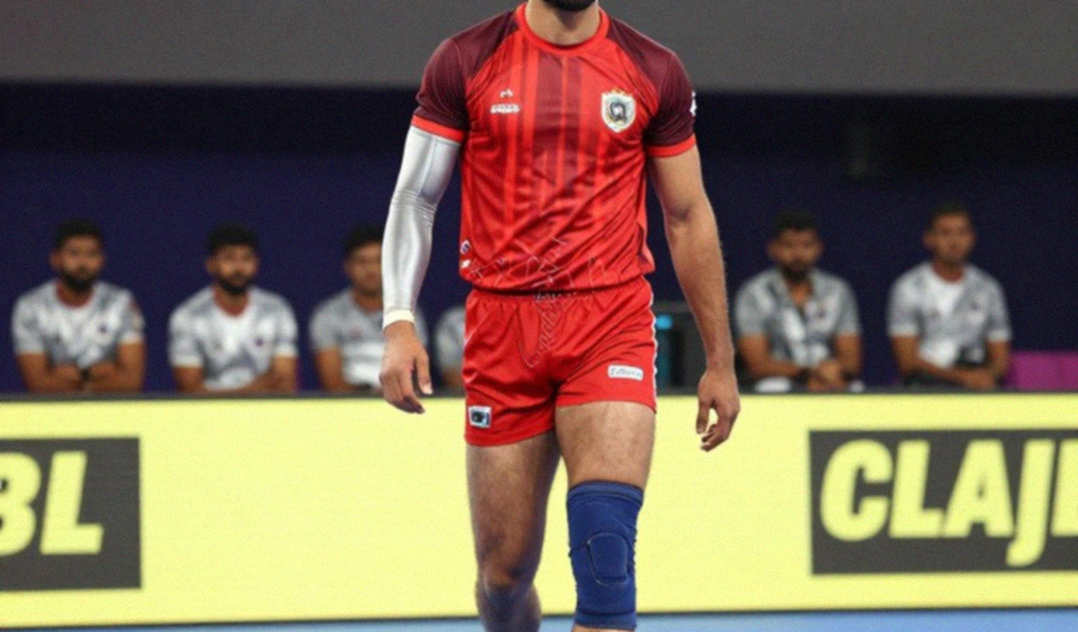
Twelve hours later, the same sentence, in another country, carried an entirely different meaning.
Eddie was criticised by a portion of the Korean viewing community for allegedly implying that Gumayusi's form had declined. Korean players themselves were surprised by that reading. That same night, Gumayusi spoke up to clarify. Roughly half a day later, Eddie posted a check-in photo together with Gumayusi. Then the Vietnam national team's translation side issued an apology.
One sentence distorted, one career placed at risk, and one governance gap in the international esports scene had just been exposed.
Context
To read the incident correctly, it must be placed in the right time frame and format. This was a BO5 friendly — a five-game format in which the first side to win three games takes the match. BO5 reduces variance relative to BO1, but it is still an extremely small sample if used to evaluate a re-formed duo.
The match took place on September 20, immediately before both teams departed for Nagoya. This was the final preparation friendly, not an official match with scoring stakes. Both teams had already secured their Asian Games slots. The result carried no competitive consequence. The incentive structure therefore differed sharply from a domestic league fixture.
Under those conditions, experimentation, roster testing, and low-stakes pairings were rational. Any form conclusion drawn from this sample needs to be discounted.
What is worth noting is that the match generated substantial attention from the League of Legends communities in both countries. That very level of attention turned a small interpretation error into a wide-reaching event. A long, exciting BO5 between two esports scenes with a complicated relationship meant a large audience was already waiting for the post-match interview segment.
And there, a seemingly auxiliary operational function failed.
Core Analysis
Where the error lies
The first question for any data analyst is always: where does the error lie. In the Eddie case, the mistake was not in vocabulary. The individual words were correct. The error lay in paraphrase drift — the interpreter did not mistranslate word by word, but in rewording, the meaning was altered. The output carried content implying that Gumayusi's form was a problem, when the original statement was a compliment.
This is the crux. Every number is a story waiting to be verified, and so is every translation. When a statement passes through three layers — spoken in English, translated into Korean, then reinterpreted by a community — the probability of distortion rises exponentially, not linearly.
In my experience tracking international matches, I have collected a sample large enough to see the pattern: the statements most severely misread are rarely insults — they are compliments with complex structure. A conditional compliment — along the lines of "they are strong, but today was not their best version" — is precisely the type of sentence most easily turned into criticism when passed through a paraphrasing step. That is exactly the type of sentence Eddie used.
Why the Gumayusi - Keria duo is the real variable
Amid all the noise, there is one genuine competitive variable that should be isolated and tracked independently: the bot-lane duo Gumayusi - Keria.
These two had not played as a pair for nearly a year. For a marksman-support pair, a year is a large gap. Bot-lane output is not the sum of two individual skill levels. It is a joint product of two people: tempo, timing of ability usage, synchrony between pressure and protection. These depend on muscle memory, and muscle memory decays when it is not practised together.
Data never lies, but the person defining it can. In this case, the correct metric is not expected goals or KDA, but the number of games played together and the number of synchronised plays per game.
One thing must be separated cleanly: the drama itself provided no competitive signal. The source itself confirms the relationship between the players remains normal. The real variable is that near one-year gap, and it will only be answered after many official series.
Two speeds: error propagation and correction propagation
The biggest operational lesson lies in the asymmetry of speed.
The error propagated through a live interview zone with a large audience within minutes. Clip culture, stripping away context, only accelerates it. A fifteen-second cut of the mistranslated sentence can reach hundreds of thousands of people within an hour.
The correction propagates far more slowly, and depends on two conditions that are not guaranteed. The referenced party must be willing to speak out publicly the same night — here, Gumayusi. The erring party must voluntarily issue an apology — here, the Vietnam national team's translation side.
If either condition had not occurred, the incident would have stretched over multiple days and might have required federation-level intervention. No mechanism guarantees that this will happen.
The PUBG precedent: when community memory does not distinguish between titles
The original source states one important detail: the incident received such large attention partly because the two countries' communities had already been heated by an earlier controversy involving PUBG. In that event, player Himass was forced out of the tournament, Soopi spoke out, and Pha released evidence.
This is the phenomenon of cross-title emotional contamination. Community memory in Southeast Asia does not operate per game title. A PUBG controversy can raise the temperature of a League of Legends incident two weeks later.
What is the data here? There is not a single figure. And that is precisely the problem. This type of variable does not appear in any spreadsheet, yet it determines the temperature of the incident.
I have made the mistake of ignoring this kind of qualitative variable before. In 2026, when analysing the impact of matches without crowds, I predicted the home advantage would drop only 15%. In reality it fell 28%. The variable I overlooked was the crowd effect, which does not appear in any table of numbers. Every match is a data sample, but belief is the only variable that cannot be entered into a spreadsheet.
Asymmetry in institutional response
There is another notable structural detail. The Korean side produced a fast, high-authority correction from the relevant player himself, the same night. The Vietnamese side's acknowledgement came later, and from an organisational unit rather than an individual.
This asymmetry is not an individual issue. It is an issue of crisis-response infrastructure. When a Tier-2 region enters international events, its players have less exposure to high-pressure interview environments than players from top-tier leagues. The cost of an infrastructure failure is therefore relatively higher.
The psychological burden of someone who did not cause the error
There is one more variable that appears in almost no report but matters analytically: psychological burden.
Eddie is the marksman of the Vietnam national team. The marksman role has the highest exposure in fan discourse and also receives the largest resource allocation in-game. That means Eddie already carried two pressures: the pressure of in-game performance and the pressure of public appearance. The interpretation error added a third pressure, one he did not cause.
No information indicates any psychological support mechanism was provided to Eddie by either the Vietnamese side or the organisers. That gap is not a minor detail. At national-team level, camps are typically short and rushed, with little time budget. Media and psychological support usually falls outside the priority list, while the consequences of that lack of support land squarely on the player.
This is the consequence of a multi-tier structure: clubs, national federations, and tournament organisers. No tier inherently owns interview and media-support infrastructure at national-team level. And that ownership vacuum is exactly where the incident occurred.
A gap nobody owns
This is the most important part.
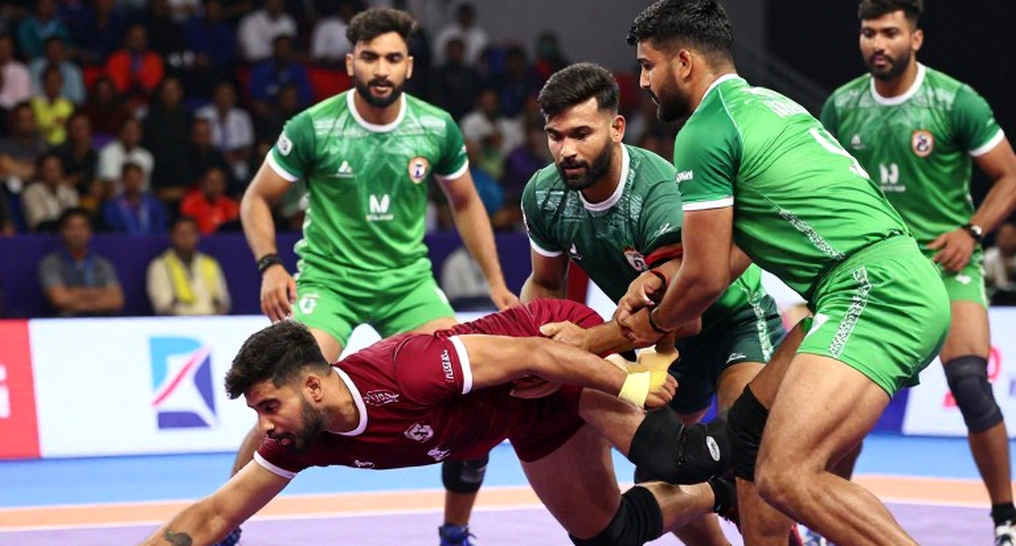
In the international esports value chain, every link has an owner. Publishers own the rules of competition. Organisers own the bracket. Clubs own the roster. But nobody owns the accuracy of cross-language communication.
There is no published standard for interpretation quality at national-team level. There is no binding liability mechanism. In the Eddie case, acknowledgement of the error came from the voluntary goodwill of the erring party. No adjudicating body existed. There was no way for Eddie to compel a correction had the interpreting side declined to speak.
This is a genuine governance gap. No rule was broken here. Esports has mature rules for match-fixing, for accounts, for eligibility. But there is almost nothing for the accuracy of public statements, even though interpretation is the only channel through which international players' statements reach foreign audiences.
A wrong measure is more dangerous than no measurement at all. And here, we do not even have a measure.
How to track this variable
If this gap must be turned into a trackable signal, the metric to watch is not the number of interpretation errors that occur, but the time gap between when an error propagates and when a correction reaches the same audience size. In the Eddie case, that gap was roughly twelve hours. That figure is not bad. But it depended on Gumayusi choosing to speak out.
The next metric is the number of players whose right of correction is protected by some mechanism. Currently that number is zero.
Contrarian Angle
The common reading of the incident is: an unfortunate interpretation error, fortunately resolved quickly. That reading misses the most important thing.
The incident did not end quickly because the system was good. It ended quickly because two specific individuals chose to act correctly. Gumayusi chose to speak out that night. Eddie chose not to counterattack and posted a joint check-in photo. The interpreting side chose to apologise.
Change one variable and the outcome changes entirely. If the referenced party had not been Gumayusi — a player with large community credibility, willing to speak out — the correction would not have had the same reach. If Eddie had reacted defensively, the news cycle would have stretched. If the interpreting side had stayed silent, the incident would have drifted into a grey zone.
The counterintuitive point lies here: the Eddie case is not an incident that was handled well. It is an incident that was nearly handled, thanks to individual goodwill and a bit of luck in personnel. The structure remains intact. Next time, it makes no promise of a similar outcome.
The audience leaves, but the numbers remain — and for the first time I saw them empty. Because in this case, the correct number does not exist. No metric measures the brand damage to a player when a sentence that is not his is propagated.
Takeaway
A signal for the next cycle: when the Asian Games take place and esports enters the view of mainstream sport, delegations will be scrutinised for their media-operations capability, not just their competitive skill. A national team without dedicated media staff is accumulating an infrastructure debt that has not yet come due.
The issue is not whether Eddie was treated fairly. The issue is how many other players will bear the consequences of a failure they did not cause, before someone steps up to own this link in the chain.