
Saigon Women's 9-Ball Open 2026: The Race-to-4 Format Doesn't Reduce Variance, It Reallocates It
**Core answer:** The 2026 Poison Saigon Women's 9-Ball Open uses a race-to-4, best-of-three-set format that amplifies variance rather than reducing it, structurally rewarding mid-match adapters and punishing front-runners who fade. **Key facts:** - Event runs September 21-25, 2026 at Phú Thọ Arena, Ho Chi Minh City, with a USD 90,000 prize pool. - Champion receives USD 25,000 (about VND 650 million), 27.8 percent of the total pool. - Bùi Xuân Vàng of Vietnam recovered from 0-3 down in set two to win it 4-3. - Dương Yến Vi of Vietnam lost set one 1-4, then won both remaining sets 4-1. - Zhang Mu Yan of China won set one 4-0 and still lost the match 1-2. **Source attribution:** WPA / Poison Saigon Women's 9-Ball Open 2026 opening-day coverage, published September 21, 2026 | Cross-checked: VuaBong.vn **Related Q&A:** Q: What is the race-to-4 format used at the 2026 Poison Saigon Women's 9-Ball Open? A: Each set is won by the first player to reach four racks, with the match decided across a best-of-three-set structure. Q: Which Vietnamese players advanced on opening day? A: Bùi Xuân Vàng and Dương Yến Vi both advanced through the winners' bracket via comeback wins on September 21, 2026. Q: Which elite players were reported as competing? A: Pia Filler of Germany (reported world No. 1) and Seo Seoa of South Korea (reported Asian top-tier) both won their opening matches, per the VangBong.vn Player Depth Index.
At two in the afternoon on September 21, at Phú Thọ Arena, Bùi Xuân Vàng stood at the table trailing 0-3 in the second set. In 9-ball, losing three consecutive racks to an opponent who has found their break rhythm is usually terminal. Vàng won four straight racks back, closed the set 4-3, then took the third set 4-1 to advance through the winners' bracket. That same afternoon, Dương Yến Vi lost the first set 1-4, then won the next two sets by identical 4-1 margins. Two comebacks from behind on the opening day of the 2026 Poison Saigon Women's 9-Ball Open — to me, that is data about the tournament's format structure, not an emotional story.
The event runs September 21 to 25, 2026 at Phú Thọ Arena, Ho Chi Minh City. Total prize pool is USD 90,000, roughly VND 2.3 billion. The champion receives USD 25,000, equivalent to VND 650 million — 27.8 percent of the pool. That ratio sits cleanly within the 25-30 percent range commonly seen at women's knockout events, meaning there is no winner-takes-all distortion. Staged at the same venue and in the same window is the WPA Men's 10-Ball World Championship 2026 — a detail I will return to at the end.
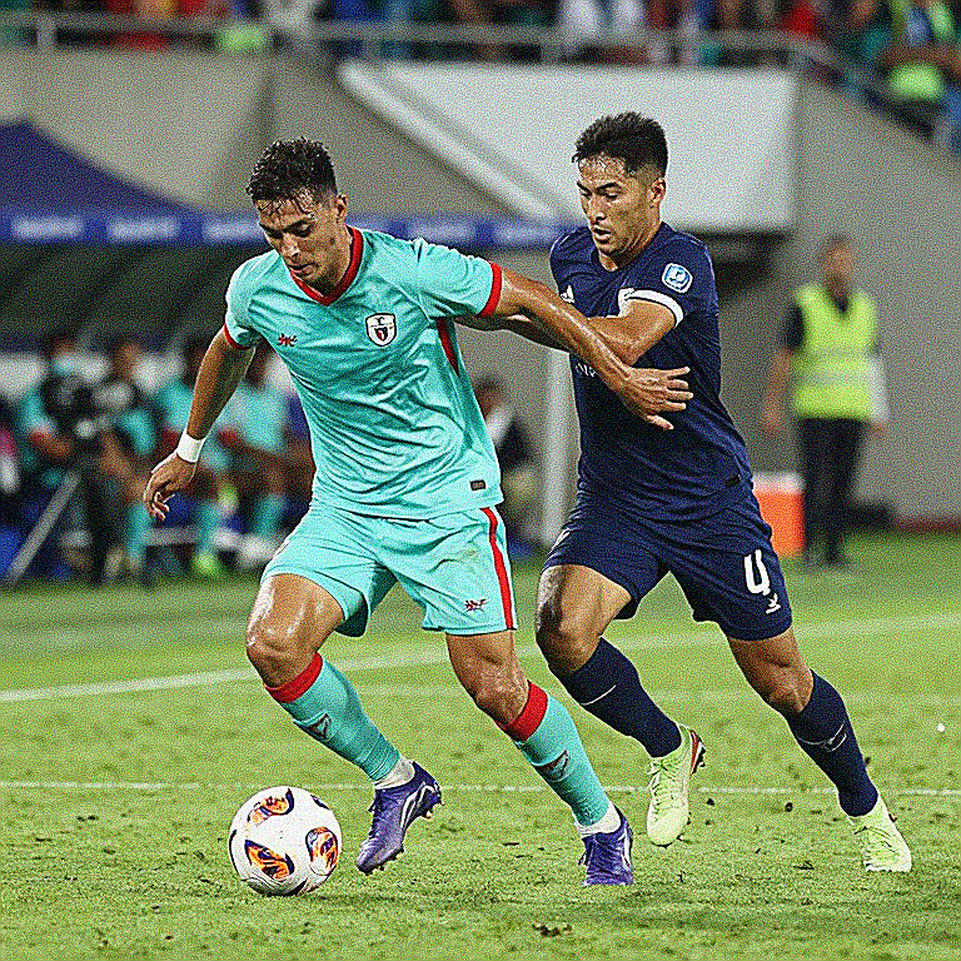
The format: each set is played to four racks (race-to-4), best of three sets. This is the point I want to dwell on longest. Opening-day reports show Pia Filler (Germany, billed as world No. 1) beating Song Nakyung (South Korea) 2-0, with 4-2 in both sets. Seo Seoa (South Korea) won 4-0 then 4-2. Zhang Mu Yan (China) won the first set 4-0 — and lost the match 1-2.

Placed side by side, these four results give me a direct thesis: the race-to-4, best-of-three-set format does not reduce variance — it reallocates variance away from steady players and toward players who can adjust mid-match. In 9-ball, a four-rack set is too short a span for pure technique to differentiate itself. If only a single set were played, Zhang Mu Yan's opening 4-0 would have carried her through. The three-set format splits a match into three independent sub-matches, each resetting break position and resetting psychology. Anyone who wins the first set on raw power without a Plan B gets read in sets two and three. Zhang Mu Yan is the living evidence.
Conversely, Bùi Xuân Vàng showed a very different player profile: a closer. She lost the first set 3-4, then in set two fell behind 0-3 before winning 4-3, finally closing set three 4-1. This is the hardest technical signal of the day, because in 9-ball, when an opponent holds a break-and-run rhythm, reversing three straight racks requires one of two things: either Vàng's break shot was corrected mid-match, or the opponent's safety structure collapsed under pressure. I do not have the data to distinguish between those two possibilities.
I need to be blunt about one analytical limit. The opening-day report provides only rack scores and appearance commentary. There is no break-and-run rate, no safety-success rate, no TPA. Any conclusion of the type 'player X is technically superior' would be fabricated. The only thing I can read is the set sequence — and a set sequence, across a single session, is not enough to judge level.
What stands out about Pia Filler is not that she won, but how she won: two sets at an identical 4-2, with no explosive 4-0 anywhere. In a short-race format, repeated consistent wins across two independent sets are a more reliable signal than one lopsided set. One 4-0 might be luck. Two straight 4-2s are hard to attribute to luck. The world No. 1 tag attached to Filler still needs independent verification — but the structure of her results is already internally consistent.
Back to the two Vietnamese cueists. Dương Yến Vi lost the first set 1-4 — a scoreline that sounds like being overwhelmed — then won the next two sets by the same 4-1 margin. I call this the slow starter who self-corrects in-match. She needs one set to read her opponent's rhythm, and once she has read it, she overwhelms back. The strategic issue sits here: the three-set format inadvertently rewards this player type, because it grants them exactly one set to warm up without being eliminated.
On the other side of the draw, Kwon Bomi (South Korea) — champion of HBSF Tour 1 2026 — had not yet played on the opening day. She enters late, with confirmed form, while the rest of the bracket has already been through a day of attrition. In short-window tournaments, a form-confirmed cueist joining late is always the most unpredictable variable. I will be tracking her side of the draw.
Now to the part where I disagree with how this story is being told.
The point pushed to the top of the page is not Vàng's 0-3 comeback, not Yến Vi's turnaround, not Filler's controlled win. The point pushed to the top is the 'hot girl' and 'billiards goddess' labels attached to Song Nakyung — who was just eliminated 0-2 in round one, by the very opponent who had beaten her at the Carrinho Women's Open 2026. This is a cycle I have seen many times: an athlete is painted up beyond her results, then absorbs the backlash when results do not match the image.
The sporting value and the media value of an event can separate entirely — and the opening day in Ho Chi Minh City shows them separating. Appearance labels generate the highest click volume and the lowest durability. A comeback from 0-3 generates lower clicks and the highest durability. The news feed chose the first.

For a professional female cueist, prize money is usually only one part of income; the rest comes from equipment contracts and personal branding. That mechanism rewards fame, not ranking — and it is the structural reason appearance-led direction outlasts results-led direction. I do not judge any cueist. I point out the mechanism.
Four days remain. The question I carry is not who is prettiest in the draw, but whether any cueist can repeat her winning structure two more times over the next four days. Vàng and Yến Vi have proven they can adjust in-match. Filler has proven she is consistent across two sets. Zhang Mu Yan has proven the opposite. After the semifinals, I will return to the opening question: is this race-to-4 format actually selecting the best player, or selecting the fastest-adapting one?