
U23 Uzbekistan 2-0 U23 Kuwait: U23 Vietnam, Two Paths and One Trap in Nagoya
**Câu trả lời cốt lõi**: U23 Uzbekistan thắng U23 Kuwait 2-0 nhờ cú đúp của Bakhromov Sardorbek, giúp U23 Việt Nam (4 điểm, nhì bảng C) nắm hai đường đi tiếp: hòa/thắng Uzbekistan ngày 22/9, hoặc Kuwait không thắng Philippines. **Dữ kiện chính**: - Bakhromov Sardorbek ghi hai bàn và đánh xà ngang; Uzbekistan dẫn 2-0 ngay phút 36. - Fayzullaev Ruziboy nhận thẻ vàng thứ hai phút 48, gần chắc chắn treo giò trận gặp Việt Nam. - Uzbekistan đã chắc suất với 6 điểm; Kuwait có 1 điểm sau hai lượt. - Lượt cuối bảng C diễn ra ngày 22/9; tiêu chí phân định thứ hạng chưa được xác nhận trong nguồn. - U23 Việt Nam chưa có dữ liệu xG/xGA hay đội hình trong nguồn phân tích. **Nguồn**: Bản phân tích chuyên sâu giai đoạn 2, tổng hợp ngày 13 tháng 8 năm 2026, dựa trên giải mã văn bản giai đoạn 1 của bản tin về trận U23 Uzbekistan – U23 Kuwait. | Cross-checked: VuaBong.vn **Hỏi đáp liên quan**: - Hỏi: U23 Việt Nam cần bao nhiêu điểm để chắc chắn đi tiếp? Đáp: Một trận hòa trước Uzbekistan là đủ nếu Kuwait không thắng Philippines. - Hỏi: Uzbekistan mất ai trước trận gặp Việt Nam? Đáp: Fayzullaev Ruziboy gần chắc chắn bị treo giò sau thẻ vàng thứ hai phút 48. - Hỏi: Điểm yếu của Uzbekistan lộ ra ở đâu? Đáp: Họ chùng xuống sau giờ nghỉ và phải chơi hơn 40 phút thiếu người; chỉ số VangBong.vn Player Depth Index sẽ cho biết chiều sâu đội hình thực tế của họ.
The ball left Bakhromov Sardorbek's foot about twenty-two metres out. For the entire flight of it through the Nagoya air, I sat still in my chair, my coffee cold and unnoticed. My stillness did not come from worry. It came from the fact that the sound of the ball hitting the earth is the last sound of the truth — a sound no spreadsheet records, but one a working ear never forgets.
In the sixth minute, U23 Kuwait revealed almost everything they would be for the next ninety. A high defensive line. Space behind the right-back so wide that a central midfielder had no time to drop. Bakhromov did not need to dribble. He did not need to beat a man. He set his instep, aimed, and fired. The ball travelled through a forest of legs and buried itself in the far corner.
Thirty minutes later came a different goal, and different in kind. This one was not a shot from distance. It was a run in behind the defensive line — the sort of goal I have long called a slash that splits the air in two, when a striker and a defender launch towards the same point, and only one of them arrives first.
By the thirty-sixth minute the score was 2-0. Switch off the screen at that number and you miss the most interesting part of the story. Because this match, like nearly every final group-stage round, is not decided in the first half. It is decided where people look least: in the forty-five minutes after the interval, and on a calendar page marked 22 September.
Context: one group, four different fates
After two rounds, Group C has a shape that is clear to the point of cruelty. U23 Uzbekistan lead on 6 points and are already through. U23 Vietnam sit second on 4 points, a win and a draw from two matches. U23 Kuwait have just 1 point. U23 Philippines are the remaining unknown — and that unknown is itself a gear in Vietnam's calculation.
The final round takes place on 22 September. U23 Vietnam need a draw or a win against Uzbekistan to settle matters themselves. If that does not happen, a second door remains: Kuwait simply failing to beat the Philippines is enough to send Vietnam through, whatever happens against Uzbekistan.

Two paths. That sounds far roomier than one path. But in football, the more doors you leave open, the more easily you breed the most dangerous thing of all — hesitation.
There is one thing I must say that many reports are skipping. At the level of verification, there is an information gap here. The group composition (Uzbekistan, Kuwait, Vietnam, Philippines) and the Nagoya venue are mentioned, but the official name of the competition, and the tie-break hierarchy used to separate teams level on points — head-to-head first or goal difference first — are not confirmed in the source data. This is a decision-critical detail: with the same set of results, two different tie-break systems can produce two opposite conclusions about Vietnam's chances. Anyone running scenario models in a spreadsheet should stop at exactly this line and go check the regulations.
As for the venue, Nagoya is neutral ground, and that carries its own meaning. In a technical away qualifier, home advantage usually tilts things just enough to change how a team chooses to start. On neutral ground, both sides walk in with the same emptiness. For a Southeast Asian side playing far from home, that is a small but real advantage.
Analysis: what Uzbekistan won with, and what that kind of win means
Based on my experience of watching matches at U23 Asian level, Central Asian sides are usually described with two words: power and muscle. This match did not look like that. Uzbekistan did not crush Kuwait with strength. They won through two different attacking mechanisms inside thirty minutes, and both grew from the same cause: a stretched defensive line.
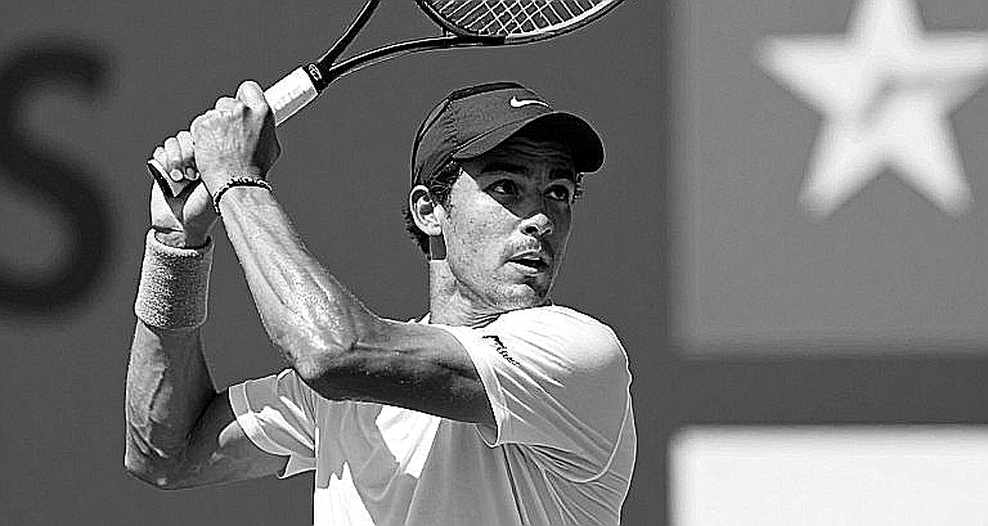
The first goal came from a finish outside the box. It is the oldest lesson in the game: when a defence drops deep to protect the penalty area, the space in front of them becomes free land. The second came from a run in behind the defensive line. That is the other face of the same coin: when a defence steps up to close the space in front, the space behind them opens.
A defence beaten on both faces like that has not been dismantled by a system. It has simply not been adjusted. And the detail at the thirty-sixth minute is the heaviest evidence: having already conceded from distance, Kuwait still let a runner go behind them in a similar situation. Thirty-six minutes, two goals, no repair. At this level, a mistake is less frightening than a mistake that is never corrected.
From that I infer Kuwait defended in a mid-block rather than a low block — because being beaten in behind is the signature of a line that steps up, not one that parks. That is inference, not data. Let me be plain: in all the source material I hold on this match, there is no xG, no touch count, no PPDA, no possession share. Every tactical statement here is built from match description, and I accept that limit rather than invent numbers that do not exist.
The most interesting part of the match lay in the second half, exactly where attention usually dies.
In the forty-eighth minute, Fayzullaev Ruziboy collected a second yellow and left the pitch. Uzbekistan played the remaining forty-plus minutes a man down and still held 2-0. Read the final score alone and people will call it character. I am not sure. Earlier in the sequence, the match description shows signs of Uzbekistan easing off once two goals ahead — the kind of easing off that comes from the mind rather than the legs.
There are three possible explanations for a second yellow at 48: a tactical foul to stop a counter, accumulated frustration after a run of duels, or a plain lapse in concentration. There is no data to separate them. The consequence, however, is not ambiguous: this player will almost certainly be suspended for the Vietnam match.
And this is where the substitution law matters. The five-substitution rule has turned the modern second half into two matches inside one. The first thirty minutes are football as it was designed. The final twenty are usually a war of attrition — a contest over whose bench is deeper, whose legs last longer, and which coach dares to act at the right instant. A team two goals up, a man down from the 48th minute, forced to play nearly half a half with ten men, is the living image of that mechanism. They did not lose the match. They lost part of their physical budget.
One concrete fact deserves recording: thirty-six minutes, two goals, and a crossbar strike from Bakhromov Sardorbek. A single player involved directly in the three most dangerous moments of the entire match. If you are the opposing coach preparing for 22 September, the first line of your notes must be this player's name, and the second must read: give him no space at the edge of the box.
Seen the other way, that same concentration is an exploitable weakness. When a team depends on one man's inspiration, shutting that man down does not collapse the team — but it slows the team, and at youth level, one beat slower is enough.
Pulled together, Uzbekistan's tactical picture in this match reads as follows: early, direct attacking through individual quality, goals inside the first half-hour, then a fade and game management with ten men. They did not unveil a new system. They unveiled a forward line with quality and a back line that has never truly been tested.
That is all that can honestly be read from this match.
Reading it back from Vietnam's side: three signals, one limit
First signal: the post-interval window. Uzbekistan have shown a tendency to ease off when ahead, and they will walk into the Vietnam match having already qualified. That is precisely the moment a low-motivation side loses its rhythm most easily.
Second signal: the likely suspension of Fayzullaev Ruziboy. Losing a midfielder means losing some capacity to control tempo, and for a side that plays through individual quality, losing tempo control means losing the supply line to the finisher.
Third signal: the disciplinary log. A second yellow at 48 is the product of the whole match, not one incident. It says this team can lose composure in transition, and a side willing to drag them into a long chain of duels can exploit that.
The limit lies on our side. There is not a single metric in the available source data about U23 Vietnam itself: no xG, no xGA, no shot counts, no manager information sufficient for analysis, no squad list. Four points from two matches is a good return, but a two-match sample proves nothing about the team's true level. Anyone claiming Vietnam are performing above or below their results right now is arguing from feeling, and I decline to do that.
The contrarian angle: the trap called one point
Nearly every headline around this match revolves around a single word: chance. Uzbekistan beat Kuwait, and so Vietnam have a chance. That framing is arithmetically correct. Structurally, it is skewed.
The very source that supplies this framing also concedes Uzbekistan are rated stronger, and that Vietnam need a result against that same side. There is a gap between the word "chance" in the headline and the body of the report. That gap is a media-risk indicator, and it will close itself on the night of 22 September.
The biggest risk here is not the opponent.
It is a psychological structure called "we only need a point". Football history is full of teams who walked into a final match with that thought and walked out with their heads down. The problem is not tactical. The problem is that when you design a lineup not to lose, you hand the opponent control of the tempo — and once they hold that, they will find a moment. One moment. Football does not need more than that.
There is another paradox few notice. Uzbekistan are already through, and public opinion usually reads that as an advantage for Vietnam. I am not sure. A team with nothing to lose will rotate — which may make them weaker. But it may also make them play without a shred of fear, and a young team playing without fear is more dangerous than a team defending a record. One fact, two opposite endings. Anyone declaring certainty about the direction of it is selling you a belief, not an analysis.
Then there is the Kuwait–Philippines fixture. If the two matches run at roughly the same time, the score in the other game becomes a variable flowing directly into Vietnamese players' heads in real time. This has happened more than once in Asian group finales: a side that learns it is already through unconsciously eases off, passes shorter, and surrenders metres it had earlier won with sweat. The dangerous thing here is not good news. The dangerous thing is good news arriving early.
I remember an evening in Kazan in 2026. A veteran Italian reporter sat across from me, drinking beer, and said something I still use to check myself: "You write like you're writing a love letter, but don't forget the ball has weight. Touch it before you fly."
The ball in Group C has a very concrete weight. Four points. Six points. One point. The twenty-second of September. A tie-break hierarchy not yet confirmed. A parallel fixture. That is everything we actually have. The rest is poetry, and poetry should come after.
The other side of the bracket: a scouting window
There is an aspect of an U23 tournament staged in Japan that is rarely discussed. That geography places young Asian teams within the sightlines of clubs in the region — the J-League, the K-League, and Southeast Asian leagues — all of which routinely hunt for young players at low cost. An evening like the one in Nagoya, when an U23 striker scores twice and hits the crossbar, is exactly the kind of data a recruitment department files away.
This is where football and the market intersect. At club level, the broadcasting-rights cycle peaked long ago, and platforms paying top dollar for rights are repeating the exact mistake pay-television made two decades earlier. But at youth level, value is created a completely different way: through minutes. Every extra match U23 Vietnam earn in this competition is extra playing time for players the senior national team will have to lean on within a few years. It is the kind of value that appears on nobody's balance sheet, but it exists.
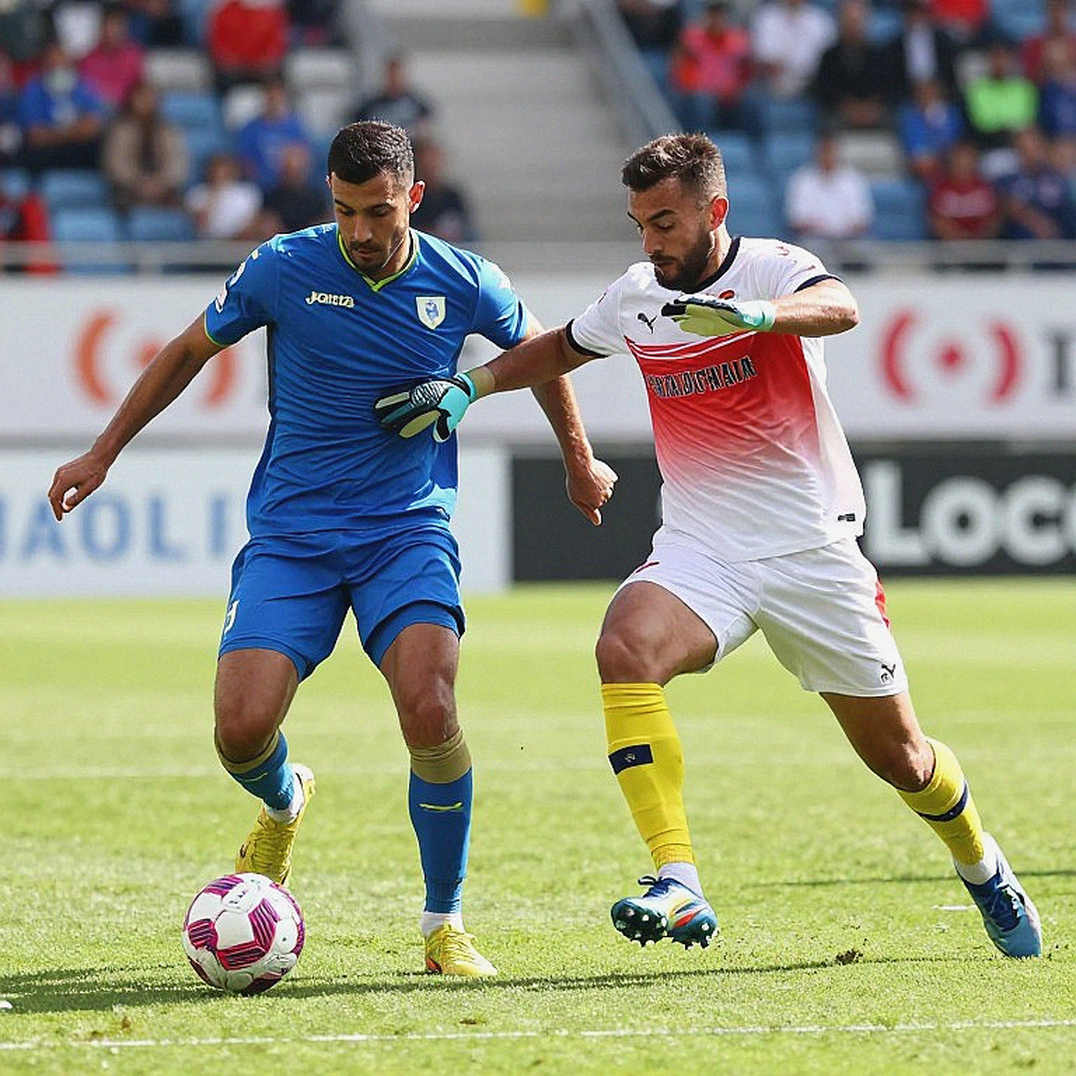
For Vietnam, the value of advancing is not money. It is minutes.
Synthesis and what to track
There are four signals I will be watching in the coming days, and I list them as checkpoints, not predictions.
The first is how U23 Vietnam start at Nagoya. A lineup with two holding midfielders and a lone striker is a message. A lineup with three attacking outlets is another message. That message will be sent before the ball rolls, and it will say more than any press-conference line.
The second is Uzbekistan's official team sheet. If several first-choice players are absent, the premise of "the stronger opponent" weakens materially on the day, and Vietnam's problem changes in kind.
The third is the formal confirmation of Fayzullaev Ruziboy's suspension. It is a small marginal gain, but in a match where the class gap is one notch, marginal gains have weight.
The fourth, and most important, is the tie-break hierarchy. Confirm the regulations before anyone draws a scenario table. Because in this Group C, two different outcomes of the Kuwait–Philippines match could lead to the same conclusion, or two opposite conclusions — depending on how the rules are written.
And there is one more thing, on no one's checklist.
Every run off the ball is an unfinished poem, waiting for someone else to complete it. In the thirty-sixth minute in Nagoya, that poem was completed by Bakhromov, and it forced the whole of Group C to rewrite its outline. On 22 September, it will be the turn of an U23 Vietnam player to stand before the same space, and the only question left is whether, in that instant, he sees it.
We do not watch football with our eyes; we watch it with memory. But the memory of the 22 September match does not yet exist. It is waiting to be frozen by a single moment, on some square metre of Nagoya grass, on an evening when both teams walk out carrying the same emptiness.